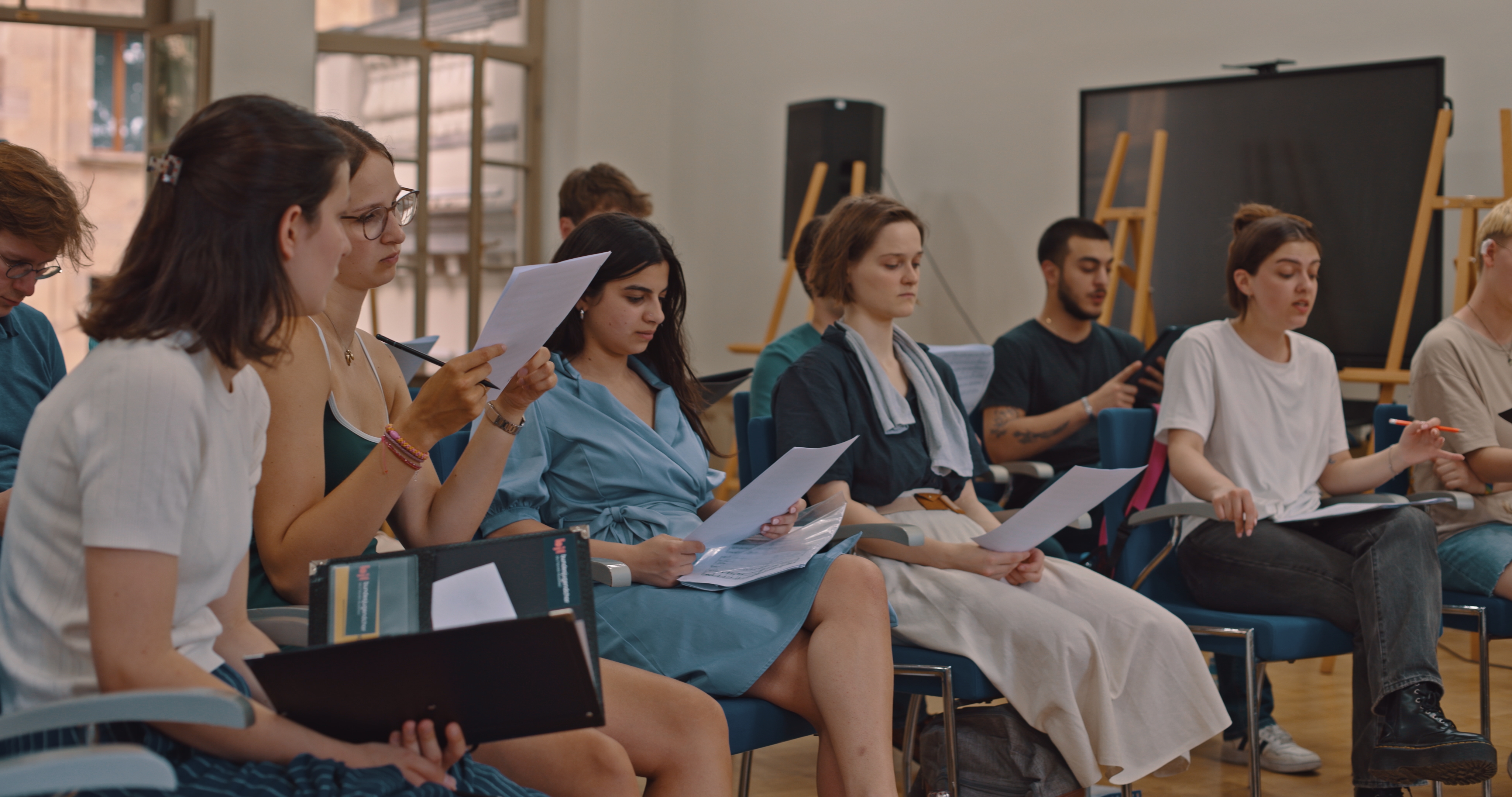
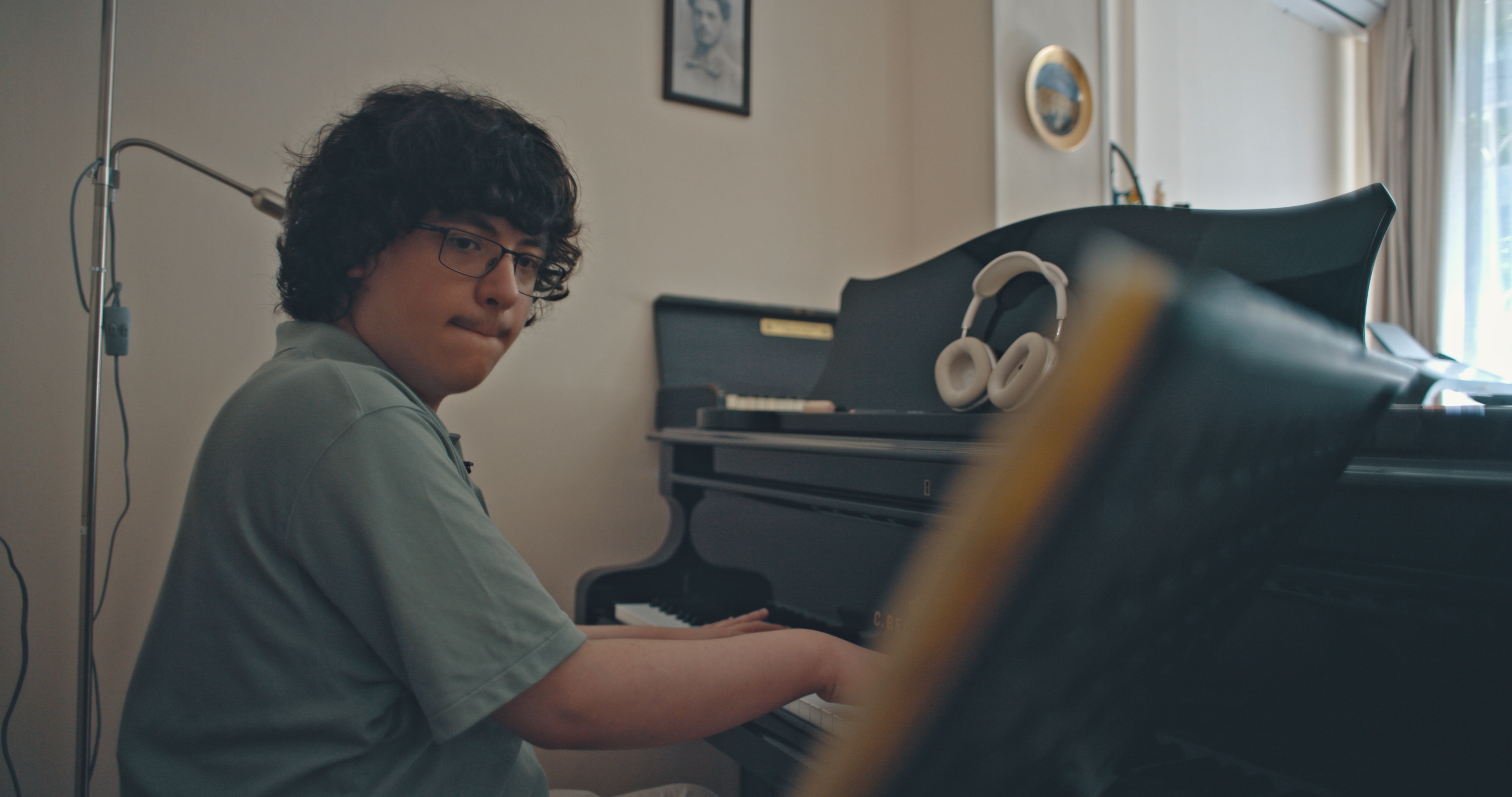
This year, the Campus Project brings the top Georgian and German youth orchestras together – and »once-in-a-generation talent« Tsotne Zedginidze to Bonn!
Wed. 23.9.2026
19:30, Beethovenhalle, Studio
Campus Concert: Georgia
- Chamber Orchestra, Vocal
- Sold Out
- € 29

Mirian Khukhunaishvili & Tsotne Zedginidze © Jasper Techel 
Members of Bundesjugendchor © Jasper Techel 
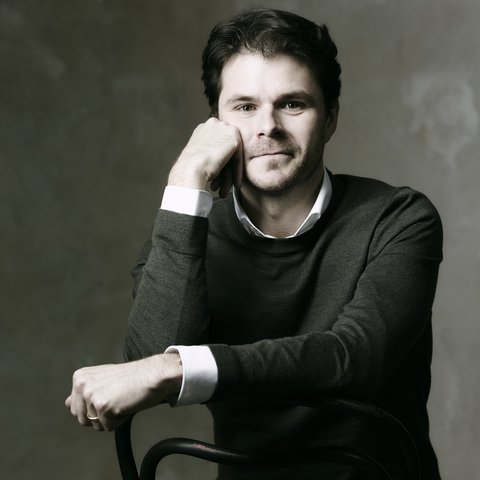
Tsotne Zedginidze © Jasper Techel 
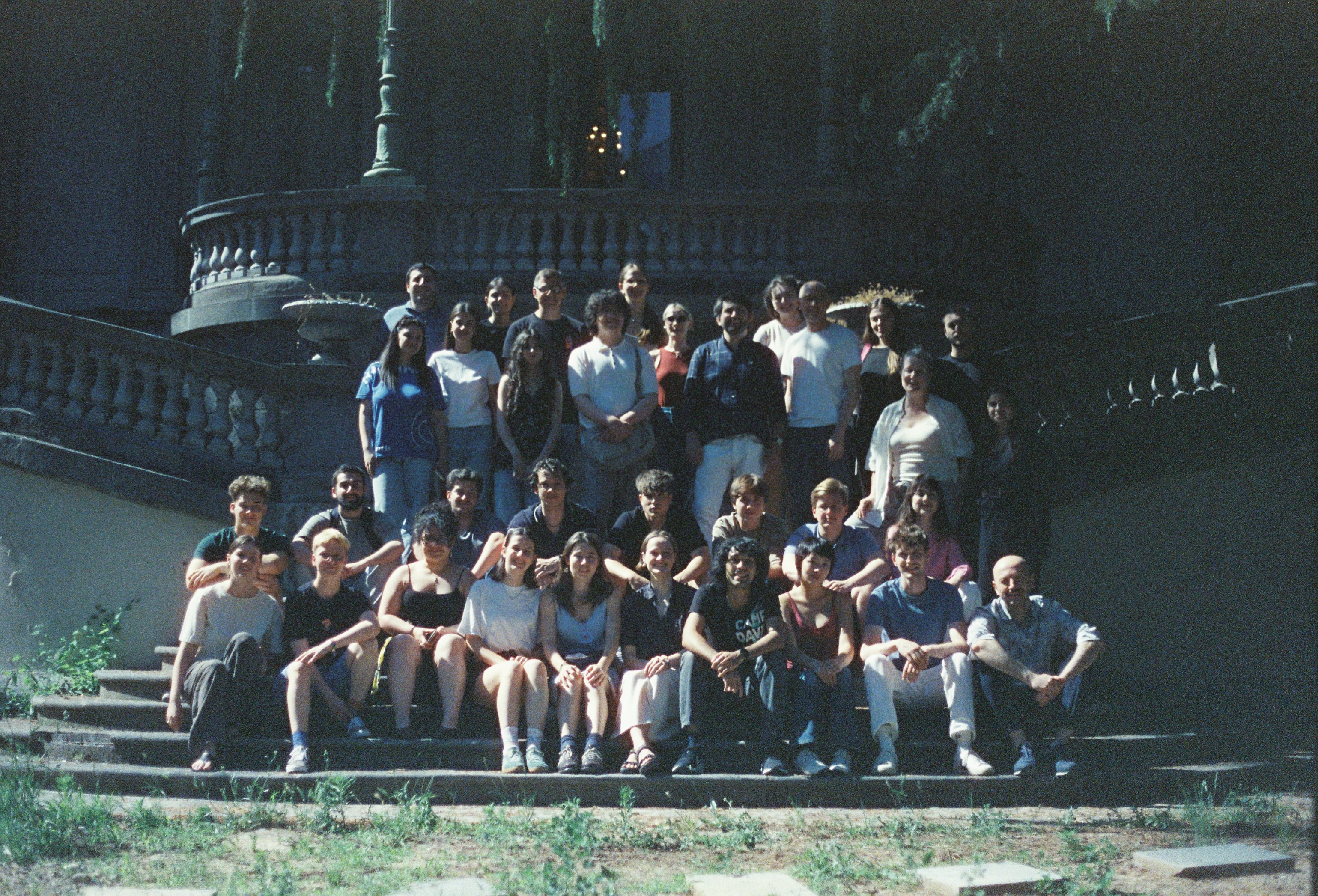
Das Campus-Ensemble 2026 © private
Contributors
- Members of Tbilisi Youth Orchestra
- Members of the National Youth Orchestra of Germany
- Members of Bundesjugendchor
- Singers from Georgia
- Tsotne Zedginidze composition & piano
- Benjamin Günst violin
- Lizi Ramishvili cello
- Marija Tamkevičiūtė harpsichord
- Mirian Khukhunaishvili musical director
Programme
Ludwig van Beethoven
VII. Allegro from String Quartet No. 14 in C-sharp Minor, op. 131, arr. for strings
Niko Sulkhanishvili
Daigvianes
Heinrich Schütz
Verleih uns Frieden genädiglich & Gib unsern Fürsten und aller Obrigkeit
Sulkhan Nassidze
Concerto for Violin, Cello and Chamber Orchestra
Niko Sulkhanishvili
Chorale
Tsotne Zedginidze
Chmebi: Georgian Fantasia for Piano and Chamber Orchestra (premiere, commissioned by Beethovenfest Bonn)
Tsotne Zedginidze
Improvisation on three Beethoven Bagatellen
Ludwig van Beethoven
Chorus »Europa steht!« from Der glorreiche Augenblick op. 136/Georgian Trad.: »sami atas tselzed meti«, arr. by Mika Mdinaradze
Georgian Trad.
Mravalzhamieri
The concert at a glance
What can I expect?
Pre-concert events
18:30, South Foyer
Democracy under pressure? The situation for cultural and media professionals in Georgia: panel discussion
Georgia has been in a politically and socially polarised environment for years. Independent and critical media are under pressure, whilst the spread of disinformation and influence campaigns is on the rise. Against this backdrop, Deutsche Welle launched a new Georgian-language journalism service on Instagram in August. Georgian cultural figures are also reporting increasing repression: criticism is being punished, in some cases even with imprisonment. Our guests will discuss how the situation for cultural and media professionals in Georgia is developing. The discussion will be moderated by Jochen Rosenkranz, Head of Culture & Sports at DW.
19:00, Studio
Concert introduction with Dr. Alexander Jakobidze-Gitman
Live stream

The concert will be broadcast live on Deutsche Welle's YouTube channel, DW Classical Music, and can be found online at beethovenfest.de/streams.
Festival Salon
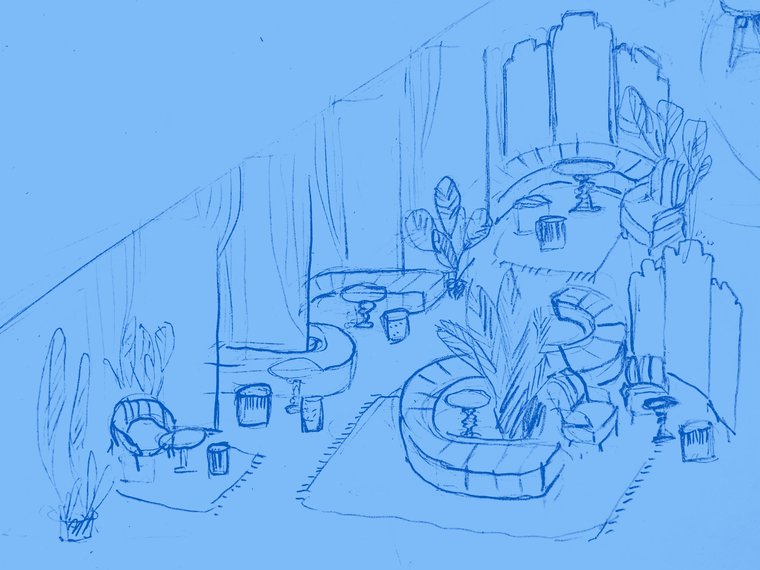
Opening hours: 17:00–23:00
19:00–21:00 Meet the Artist – with Katrīna Paula Felsberga & Lal Karaalioğlu
Description
Georgia in the cultural focus – our Campus Project 2026 invites this country’s young generation for a dynamic cooperation with young German musicians, setting an example for dialogue and openness. Members of the major youth orchestras of both nations connect Beethoven with a cross-section of Georgian musical modernism. The Campus commissioned work is being written by seventeen-year-old Tsotne Zedginidze – according to Lisa Batiashvili, a »once-in-a-generation talent«.
Magazine
All articles
With friendly support

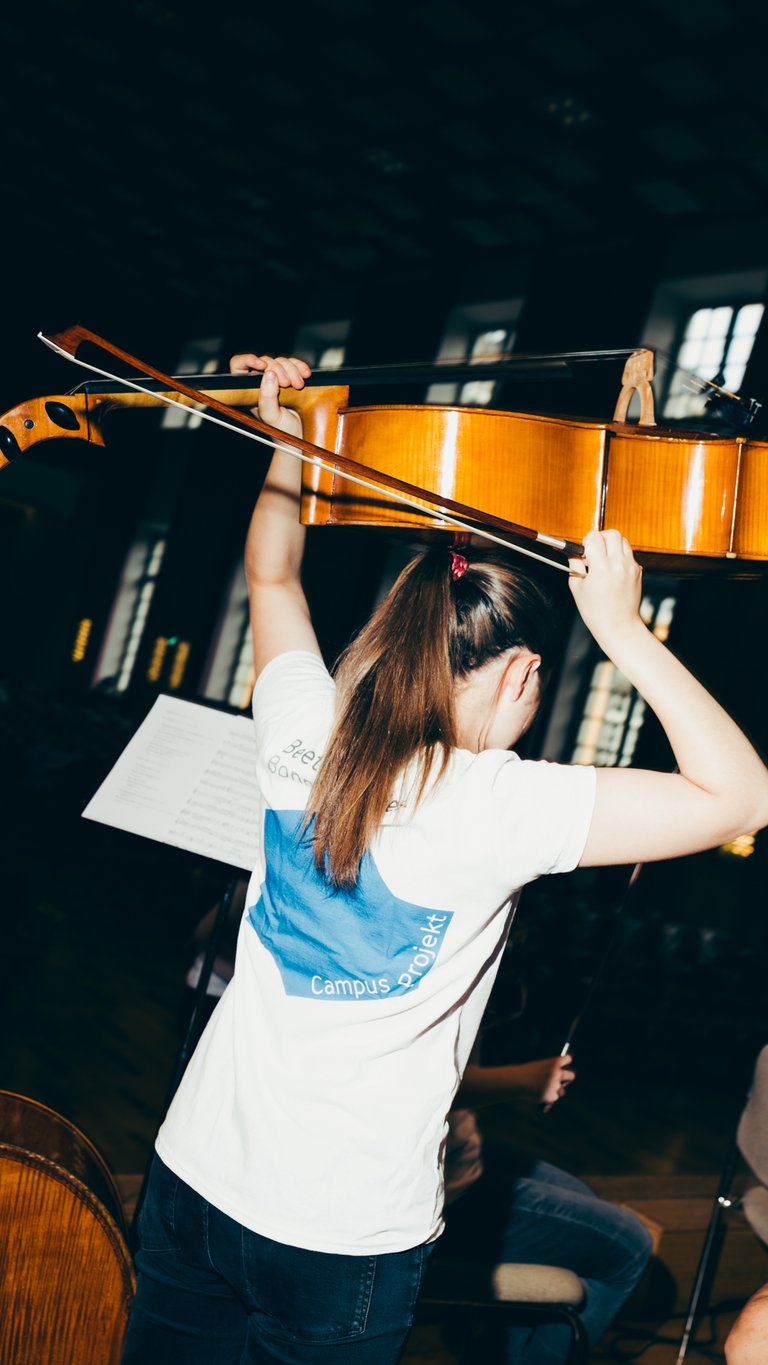
Participants
Members of Tbilisi Youth Orchestra
Teona Kelberashvili violin
Milena Jalalbekovi violin
Natali Khupenia violin
Tekla Bakradze violin
Katarina Gegelia violin
Elene Gogodze viola
Ketevan Nagladze viola
Kakhaber Metreveli cello
Members of Bundesjugendorchester
David Sogoan violin
Melanie Mardiros violin
Eduard Srebnytskyi violin
Jakob Nordalm viola
Marc Strokov cello
Lisanne Edeltraut Künzler cello
Rebecca Weng double bass
Lucas Matthias Emmanuel Hettinger timpani
Members of Bundesjugendchor
Nora Käser soprano
Clara Prinz soprano
Svea Behrens alto
Pauline Beaucamp alto
Simon Pichol tenor
Jakob Reichmann bass
Singers from Georgia
Ekaterine Ekseulidze soprano
Ani Bibiladze alto
Zurabi Natroshvili tenor
Giorgi Mantskava tenor
Nikoloz Edilashvili bass
Sandro Kheladze bass
Tsotne Zedginidze composition & piano
Benjamin Günst violin
Lizi Ramishvili cello
Marija Tamkeviciute harpsichord
Mirian Khukhunaishvili Artistic Director
Programme
Ludwig van Beethoven (1770–1827)
String Quartet No. 14 in C-sharp Minor, op. 131, arr. for strings
VII. Allegro
Niko Sulkhanishvili (1871–1919)
Daigvianes
Heinrich Schütz (1585–1672)
Verleih uns Frieden genädiglich
Gib unsern Fürsten und aller Obrigkeit
Sulkhan Nasidze (1927–1996)
Concerto for Violin, Cello and Chamber Orchestra
Intermission
Niko Sulkhanishvili
Chorale
Tsotne Zedginidze (*2009)
Chmebi: Georgian Fantasia for Piano and Chamber Orchestra (premiere, commissioned by Beethovenfest Bonn)
Tsotne Zedginidze
Improvisation on three Beethoven Bagatellen
Ludwig van Beethoven
Chorus »Europa steht!« from Der glorreiche Augenblick op. 136/Georgian Trad.: sami atas tselzed meti, arr. by Mika Mdinaradze
Georgian Trad.
Mravalzhamieri
About the concert night
Konzertdauer: ca. 100 Minuten
Gastronomisches Angebot vor Ort
Nach dem Konzert laden wir das Publikum zur Campus-Abschlussparty im Festival Salon ein.
Zusätzlich zu Blumen schenken wir den Künstler:innen Blüh-Patenschaften, mit deren Hilfe in der Region Bonn Blumenwiesen angelegt werden.
Concert introduction
18:30, Seminar Room C
Democracy under pressure? The situation for cultural and media professionals in Georgia: panel discussion
Georgia has been in a politically and socially polarised environment for years. Independent and critical media are under pressure, whilst the spread of disinformation and influence campaigns is on the rise. Against this backdrop, Deutsche Welle launched a new Georgian-language journalism service on Instagram in August. Georgian cultural figures are also reporting increasing repression: criticism is being punished, in some cases even with imprisonment. Our guests will discuss how the situation for cultural and media professionals in Georgia is developing. The discussion will be moderated by Jochen Rosenkranz, Head of Culture & Sports at DW.
19:00, Studio
Concert introduction with Dr. Alexander Jakobidze-Gitman
Live stream
Media partner
The concert will be broadcast live on Deutsche Welle's YouTube channel, DW Classical Music, and can be found online at beethovenfest.de/streams.
Please note that parts of the audience may be visible in the live stream. We would ask you to refrain from taking your own photographs or videos.
Festival Salon
Opening hours: 17:00–23:00
19:00–21:00 Meet the Artist – with Katrīna Paula Felsberga & Lal Karaalioğlu
Grußworte
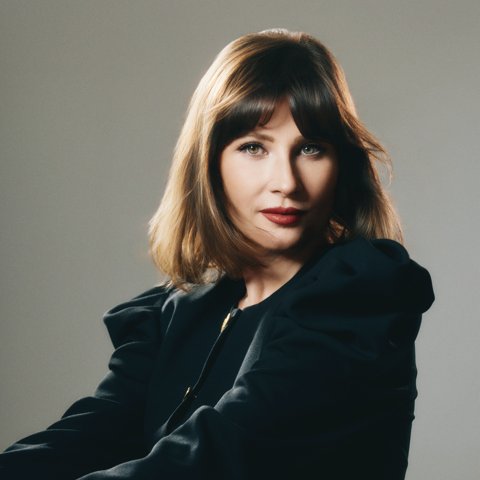
Liebe Besucher:innen des Campus-Konzerts,
Als ich in den turbulenten 1990er-Jahren Georgien verließ und mit zwölf Jahren nach Deutschland kam, befand sich meine Heimat in einer schwierigen Zeit. Für viele Menschen hier war Georgien damals noch ein weitgehend unbekanntes Land – fern, geheimnisvoll und kaum auf der kulturellen Landkarte präsent.
Umso bewegender ist dieser Abend für mich. Deutschland wurde der Ort, an dem ich meine musikalische Ausbildung absolvieren und meinen künstlerischen Weg finden durfte. Gleichzeitig habe ich meine georgischen Wurzeln nie verloren – sie sind bis heute ein wesentlicher Teil meiner Identität.
Aus dieser tiefen Verbundenheit heraus habe ich 2020 eine Stiftung zur Förderung junger georgischer Musikerinnen und Musiker gegründet. Viele unserer Stipendiatinnen und Stipendiaten studieren oder leben heute in Deutschland und tragen den musikalischen Austausch zwischen beiden Ländern auf ganz natürliche Weise weiter.
In den vergangenen zwanzig Jahren durfte ich erleben, wie die Freundschaft zwischen Deutschland und Georgien gewachsen ist und wie offen und interessiert Menschen hier meinem Heimatland begegnen. Besonders schön ist es zu sehen, wie junge Musikerinnen und Musiker beider Länder gemeinsam musizieren, voneinander lernen und sich gegenseitig inspirieren. In solchen Momenten wird Musik zu einem Zuhause – einem Ort der Verbundenheit, der über Grenzen hinausreicht.
Ihre Lisa Batiashvili
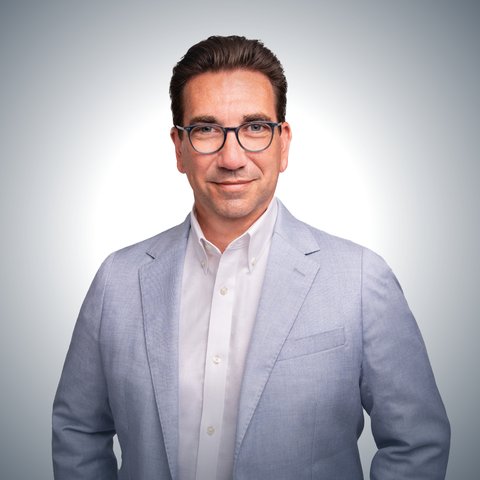
Liebe Konzertbesucherinnen und -besucher,
junge georgische Musikerinnen und Musiker sind in diesem Jahr zu Gast beim Campus-Projekt. Dabei handelt es sich um eine Art ›Wiederbegegnung‹, denn bereits im Jahr 2003 war Georgien Partnerland. Das Tbilisi Youth Orchestra sowie ein Vokalensemble haben dafür gemeinsam mit Mitgliedern des Bundesjugendorchesters und des Bundesjugendchors in Tbilisi und in Bonn unter der künstlerischen Leitung des renommierten georgischen Dirigenten Mirian Khukhunaishvili geprobt. Den diesjährigen Kompositionsauftrag erhielt das pianistische und kompositorische Ausnahmetalent Tsotne Zedginidze.
Das Konzert eröffnet neue Perspektiven auf Georgiens reiche Musiktradition und bietet Raum für völkerverbindenden und kulturellen Dialog. Gerade in einer Zeit gesellschaftlicher Umbrüche wird die Musik zu einer Sprache des Austauschs, der Offenheit und der europäischen Verständigung. Ich wünsche Ihnen ein spannendes Hörerlebnis und ebenso viel Freude bei den kommenden Veranstaltungen des Beethovenfestes.
Ihr Guido Déus
Oberbürgermeister der Stadt Bonn
Gefördert durch
Introduction
Beethoven, Georgia and the sound of a shared horizon
What happens when young German and Georgian musicians bring Beethoven together with seventeenth-century German sacred polyphony, Georgian art music and Georgian vocal traditions whose historical memory reaches across centuries? And what does it mean for two very different histories of statehood, war and belonging to meet on the same stage, at a moment when Georgia’s own path toward Europe is being publicly and passionately contested? This year’s Campus-Konzert brings that questions home.
Bringing together the two national youth orchestras
In a rehearsal room in Tbilisi in June 2026, before a single note had been played for an audience, a German violinist and his Georgian stand partner ran out of shared spoken vocabulary. As two of their orchestra colleagues recalled, the impasse broke not with a dictionary, but the moment the musician from the Tbilisi Youth Orchestra simply sang the phrase aloud to his partner from the German National Youth Orchestra.
For the violinist from the German National Youth Orchestra David Sogoan, whose parents are Georgian but who was born and raised in Germany, the encounter carried a deeper personal resonance: this was his first visit to Georgia, a first physical encounter with the country whose culture had long shaped his family history. For a moment, the distance between Bonn and Tbilisi closed.
Georgia: A Country at a Crossroads
Since 2001, the Campus Project of Beethovenfest has turned toward countries in the midst of historical transformation – Ukraine, Afghanistan, Iran, and now, for the second time since 2003, Georgia. These are places where culture does not accompany history; it becomes a primary field in which history is understood, negotiated, and contested.
Georgia arrives at this year’s festival in a charged moment. Independent since 1991 and an EU candidate since 2023, it is a society in which a strong pro-European orientation among much of the public coexists with sharp political conflict over the country’s future direction – a conflict that has brought sustained street protests since late 2024. As the country debates its democratic future, music becomes a crucial space to assert an identity that is organically European yet uniquely its own. The question is not whether a work belongs exclusively to one culture or another, but how the past echoes in a turbulent present and what music can reveal when a society stands at a crossroads. For conductor Mirian Khukhunaishvili (*1990), this engagement on stage is an artistic necessity rather than a political statement. »We could not simply make music without reflecting the reality around us,« he says. »Music, I believe, is the strongest message.«
Concert part 1
Memory and Transformation:
The First Half of the ConcertKhukhunaishvili describes the architecture of the programme in simple terms: the first half explores »our past«, leaving the second to chart »our present and future.«
The first part of the programme turns toward history – how music carries experiences of struggle, uncertainty, and resilience – spanning 17th-century German polyphony to 20th-century Soviet Georgian modernism.
Deciding how to open the concert, he says, took longer than anything else. Khukhunaishvili ultimately chose an arrangement for string orchestra of the Finale from Beethoven’s String Quartet No. 14 in C-sharp Minor, Op. 131 – among the most searching statements of the composer’s late output. »It carries Beethoven’s revolutionary resistance,« Khukhunaishvili says. »It starts with an immediate, statement-like energy.« In Beethoven’s late works, resistance is expressed through relentless questioning, setting the tone for the entire programme.
This dramatic opening leads directly into the aria »Daigvianes« (»They Tarried«) by Niko Sulkhanishvili (1871–1919), a surviving piece from his lost opera Patara Kakhi (Little Kakhi), which plays to an emotional register. The piece – which Khukhunaishvili long assumed was an anonymous folk song – follows a shepherd in the mountains who is listening to friends fighting below and wondering whether he is doing enough to intervene. The conductor, reflecting on his own career abroad, remarks: »I’m from Georgia, but I live abroad … I follow everything from a distance through the news, detached from the daily reality on the ground.«
From this intimate, personal reckoning, the programme turns to a collective plea for peace born from the ashes of the Thirty Years’ War in Heinrich Schütz’s (1585–1672) sacred choral music (Geistliche Chormusik). His Verleih uns Frieden (SWV 372) and Gib unsern Fürsten (SWV 373), both published in 1648, carry a striking urgency. The prayer for peace and the political order that sustains it (»Give our rulers and all government peace and good policy, that we may lead under them a quiet life.« »Gib unsern Fürsten und aller Obrigkeit Fried und gut Regiment, daß wir unter ihnen ein geruhig und stilles Leben führen mögen«) finds an immediate echo in the programme’s second half: Sulkhanishvili’s chorale, sung in Georgian.
The first half concludes with Sulkhan Nasidze’s (1927–1996) Double Concerto. Nasidze belongs to the generation of Georgian composers known as the ›Sixtiers,‹ who emerged during the post-Stalinist Thaw to push against the official Soviet musical canon. The concerto with its masterful polyphonic web of instrumental parts brings the first half to a complex climax.
Concert part 2
Present and Future:
The Second Half of the ConcertThe second half of the programme turns toward renewal and dialogue between generations, traditions, and societies moving fluidly between the 20th century and the contemporary moment.
It opens with Niko Sulkhanishvili’s chorale »Gmerto, Gmerto« (»Lord, Merciful Lord«), elevating the yearning for peace from an individual prayer to a collective national appeal: »Grant endurance to the nation, grant victory over its enemies; O, Lord, strengthen it forever.«
It is placed deliberately before the composer’s great-grandson, pianist and composer Tsotne Zedginidze (*2009), takes the stage. »By placing the ancestor’s prayer immediately before Tsotne Zedginidze’s world premiere, we illuminate a living compositional lineage within Georgian art music,« says Khukhunaishvili.
The commissioned work, Khmebi: Georgian Fantasia, marks a major evolution in seventeen-year-old Zedginidze’s musical language. After years of focusing strictly on avantgarde music, he has re-engaged with the roots on his own terms. »I started understanding Georgian folk music much better; I started loving it.« The work weaves recognizable Georgian folk tunes into a vibrant multi-generational dialogue.
Zedginidze appears again in a solo improvisation on Beethoven’s late Bagatelles, Op. 126, an element he kept entirely unscripted during rehearsals. »I don’t want to alter Beethoven’s material directly,« he explains. »It will be my answer to Beethoven.« By leaving the original score intact while improvising around its edges, he honors Beethoven’s subversive spirit through immediate, contemporary dialogue across two centuries.
A Shared Horizon
The programme reaches its climax in a new synthesis arranged by Mika Mdinaradze. The score bridges Beethoven’s »Europa steht« from the cantata Der Glorreiche Augenblick, Op. 136 with traditional Georgian songs: the warrior tune Abaula, Harira, an improvisatory refrain characteristic of western Georgian polyphony, and Sami Atas Tselze Meti. The latter is an urban melody set to Akaki Shanidze’s 1917 poem that was collectively composed by Georgian Prisoners of war in Poland to celebrate Georgia’s 1918 declaration of independence. The text rejoyces: »For more than three thousand years we have been singing and we will be singing our sweet Mravalzhamieri«.
Mika Mdinaradze about his arrangement of Beethoven’s »Europa steht«
»›Europa steht!‹ opens his cantata Der Glorreiche Augenblick for the Congress of Vienna, 1814. The occasion is entirely of its own moment: a hall of statesmen about to redraw the map of Europe over the heads of small nations. But the music outlasted the occasion. That gap is where my piece begins. I did not want to quote Beethoven decoratively. His opening gesture gives the frame, and two Georgian layers grow inside it — the folk song Sami atas tselzeda meti and a stylisation of the western Georgian Harira. Nothing is blended into a single exotic surface. Each layer keeps its own grammar, and they share the same space.«
What emerges is not superficial fusion but a genuine encounter. Beethoven remains distinct, while Georgian polyphonic structures retain their identity. Together, they create multi-voiced acoustic space, a sound model of Europe as a dialogue rather than forced uniformity. By weaving Beethoven into the fabric of Georgian musical tradition, the work reveals an inherent kinship – a resounding declaration of where Georgia belongs.
As an encore, the traditional Georgian hymn of blessing, Mravalzhamieri (»May You Live for Many Years«) sung a cappella as the orchestral players rise to join the choir, closes the evening. Mravalzhamieri does not neatly resolve the tensions between past and future; instead, it allows them to resonate together, holding memory and hope in a single breath where no single path or voice is dictated and every possibility remains audible.
Nana Sharikadze
Interviews
Mirian Khukhunaishvili
in interview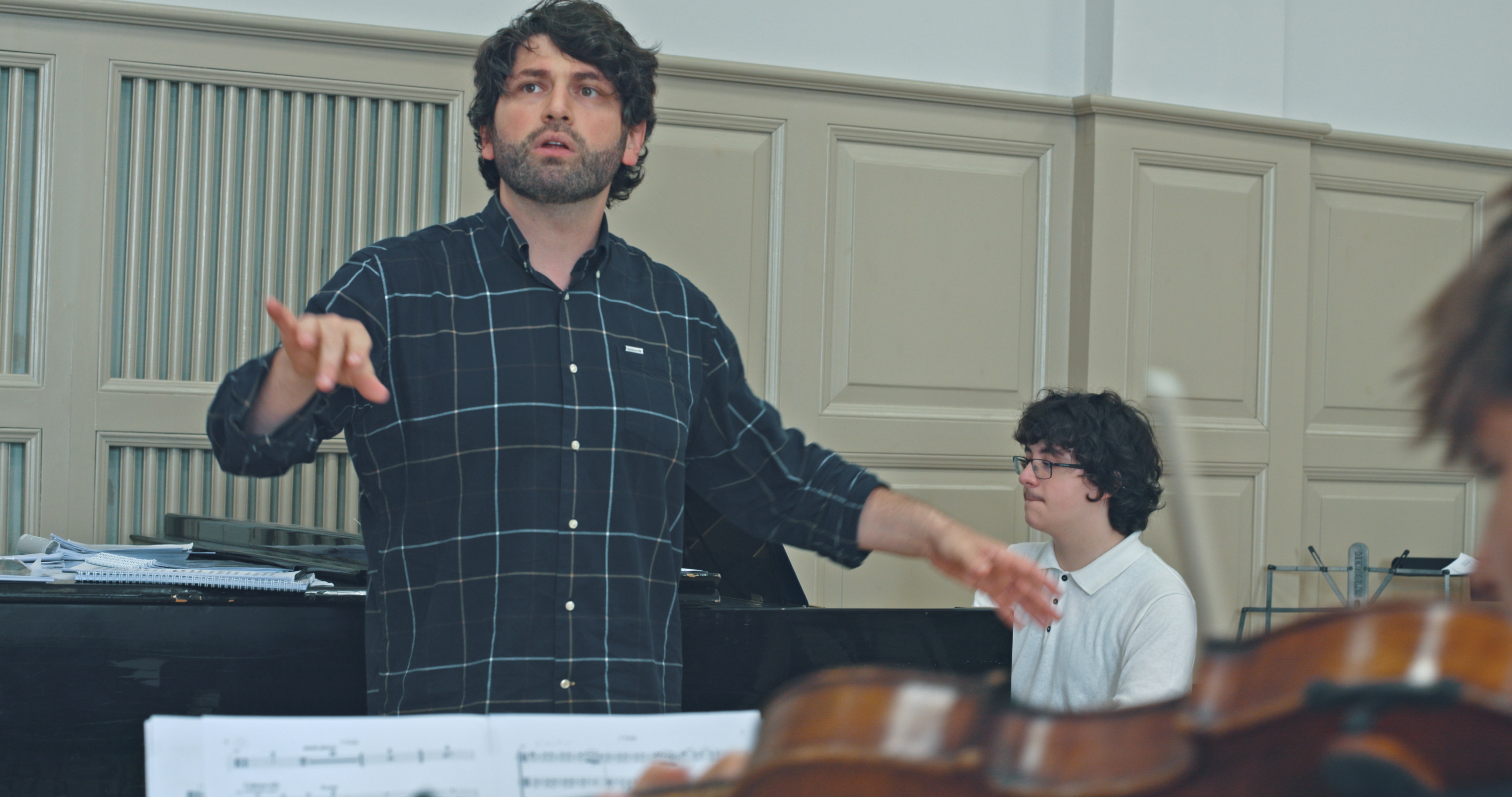
What are your goals as Artistic Director of the Campus Project?
I have several goals. The first is to showcase the classical repertoire of Georgian music and to the public. We have Tsotne Zedginidze as a contemporary school representative. We have the choral music of our country. Secondly, we have a message. We could not just play and sing without reflecting the reality around us. Music, I believe, is the strongest message. Our concert is about the kind of geopolitical reality we are living in. We are saying that our hope for Europe means not just joining something, but that this is our shared home, that we are fighting to be a part of it. The main message is that we share the Western European values of human rights in Georgia. I am enthusiastic to be part of this project at Beethovenfest. To bring the younger generation to this festival means to have more connection with the values we are striving for.
Tsotne Zedginidze
in interview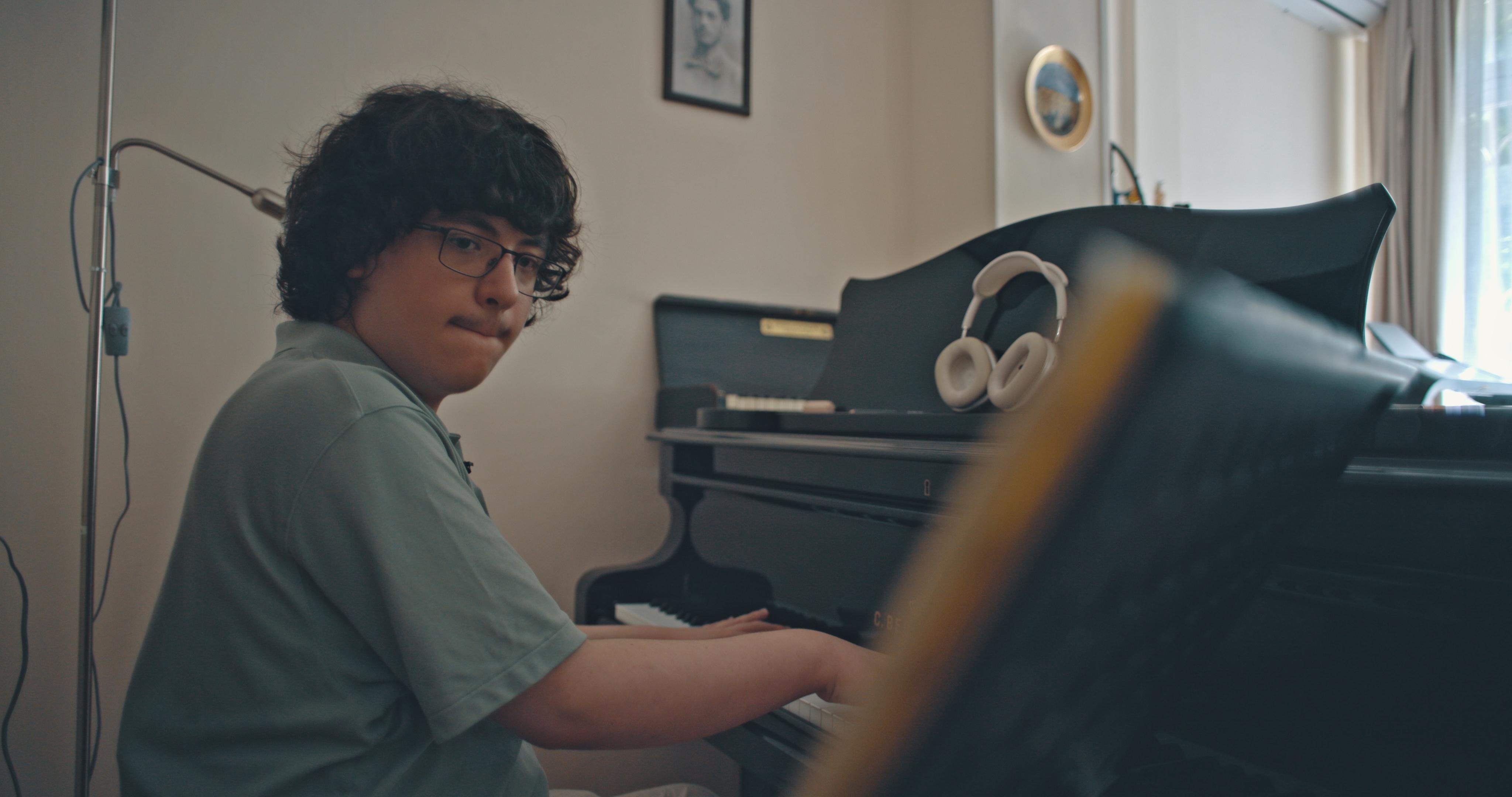
How do you see your role and the meaning of the Campus Project?
I see this project as a blend and exchange of cultures of Georgia and Germany. Young musicians from both countries come together in the orchestra, they communicate, make music with the great conductor Mirian Khukhunaishvili. I was asked to write a piece for this orchestra and this project. The request was specifically to put something Georgian in my music. The result is my new piece Chmebi: Georgian Fantasia for chamber orchestra and piano.
I heard that in the past you did not want to use folk music and folk tunes in your work. Why was that?
Yes. Before, I was very much against Georgian folk in my music. At a younger age I listened to a little bit of folk music, but it wasn’t my favourite. It was more European classical music of the nineteenth and twentieth century.
What made you to turn to traditional music?
As I became older, I started to understand the Georgian music much better and I started loving it. My great-grandfather Niko Sulkhanishvili was a very prominent Georgian composer, known for his perfect blending of Georgian folk music with classical music. There are some of his pieces in the Campus Concert, too.
Interviews: Nana Sharikadze
Mika Mdinaradze
in interview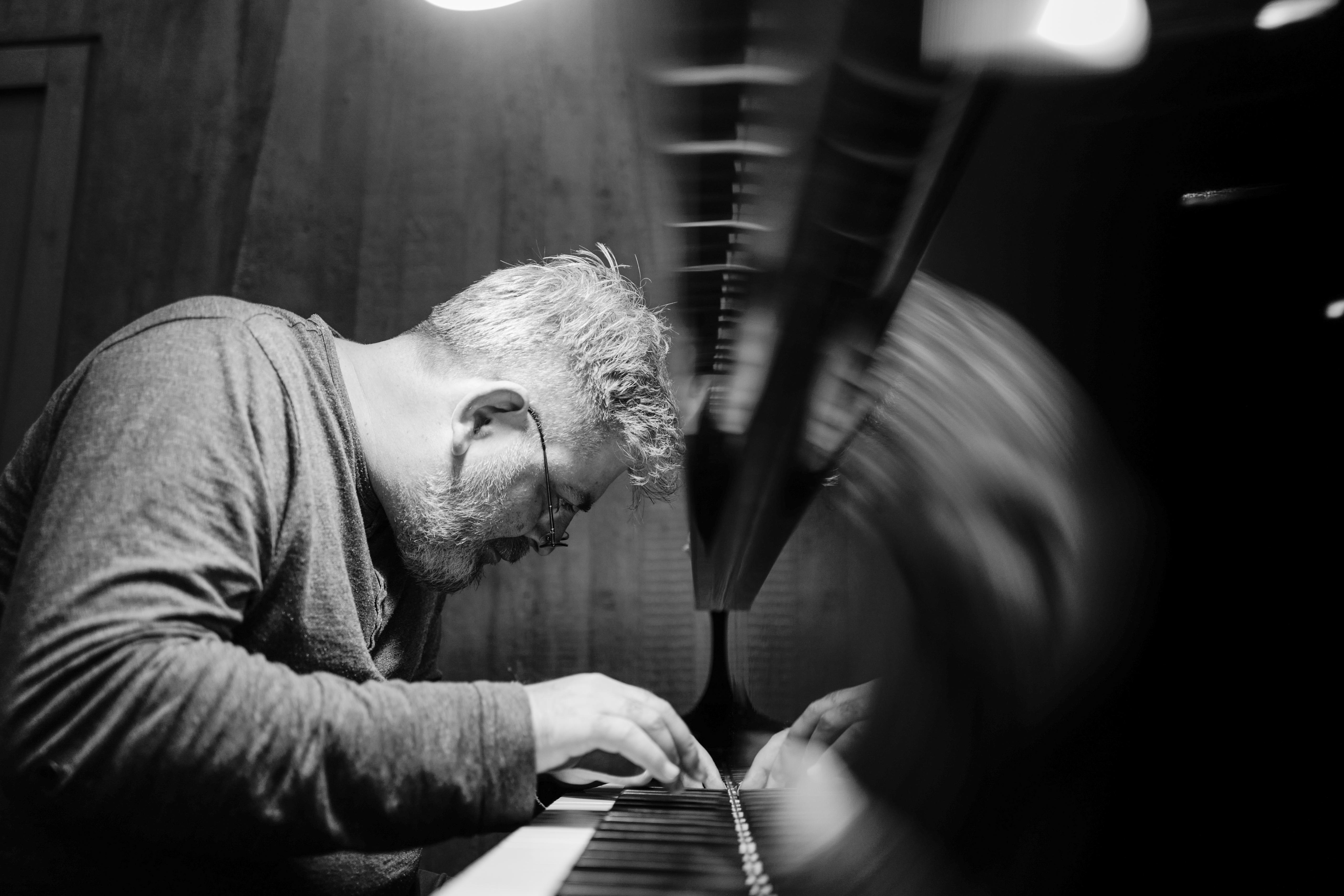
How do you see Beethoven and Georgian music as compatible?
Arranging Beethoven in fusion with Georgian music is not a one-off idea. It is a question I have been working on for eight years. And I can say, with real joy, that the two traditions have a great deal in common – though not in any obvious way. Georgian polyphony is not built on functional harmony, and most attempts to reconcile the two end in something sentimental. But where they meet, they meet as brother and sister. Both think in independent voices. In Georgian singing no voice is subordinate: the middle voice is not an accompaniment, it has a will of its own, and the whole holds together precisely because nothing is suppressed. Beethoven’s counterpoint works on the same principle. That is not a technical coincidence. It is an ethical one.
For this concert you have arranged Beethoven’s »Europa steht«. Does his piece carry a significance for you today?
Beethoven addressed those words to the men who were dividing Europe among themselves at the Congress of Vienna 1814. Two centuries later they belong to people with no power at all. What Europe needs most today is exactly what the title says: to stand together. The challenges around us are of a size no single state can meet alone. Georgia was torn from its Western course in 1921, when the Soviet empire occupied the country. I was born in the Soviet Union and I know very well what my country lived through in those decades. We have been working since 1991 to be free of that inheritance, and the work is not done. So »Europe stands« is not a description for us. It is a hope – that Europeans still understand what the composer was reaching for, and that Europe holds for those standing at its edge as well as at its centre, be it in Georgia or the Ukraine.
Interview: Anastassia Boutsko
Vocal texts
Heinrich Schütz
Verleih uns FriedenVerleih uns Frieden genädiglich,
Herr Gott, zu unsern Zeiten,
Es ist doch ja kein ander nicht,
Der für uns könnte streiten,
Denn du, unser Gott alleine.
***
Grant us peace graciously,
Lord God, in our time;
there is indeed no other
who could fight for us
than you, our God, alone.
Heinrich Schütz
Gib unsern FürstenGib unsern Fürsten und aller Obrigkeit
Fried und gut Regiment, daß wir unter ihnen
Ein geruhig und stilles Leben führen mögen
In aller Gottseligkeit und Ehrbarkeit.
Amen.
***
Give our rulers and all lawgivers
peace and good government,
that under them
we might lead a quiet and peaceful life
in all blessedness and honor.
Amen.
Niko Sulkhanishvili
ChoraleR’merto motskaleo nu mogvakleb schetsevnasa
eris kopna mT’erta dzleva R’merto marad gangvimtkiz’e
Ludwig van Beethoven
Europa steht!Europa steht!
Und die Zeiten,
Die ewig schreiten,
Der Völker Chor,
Und die alten Jahrhundert,
Sie schauen verwundert empor!
Wer muss die Hehre sein,
Die von dem Wunderschein,
Der alten Götterwelt umzogen,
Herauf von Osten geht
In einer Fürstin Majestät,
Und auf des Friedens Regenbogen?
***
Europe stands!
And the ages,
Which march on eternally,
The chorus of nations,
And the ancient centuries,
They look up in wonder!
Who must be the noble one,
Who, bathed in the wondrous radiance
Of the ancient world of gods,
Rises from the East
With the majesty of a princess,
And upon the rainbow of peace?
Trad.
sami atas tselzed metiSamiatas ts’elzed meti gvitskhovria rogorts ersa,
Bevrsa shav dghes movsts’rebivart, magram bevrsats bedniersa.
Gvimgheria, kidets vimghert chvens t’kbil mravalzhamiersa.
Kartvelt siskhlit sheghebili dghesats Mt’kvari aris mghvrie,
Kartvel dedis dazrdil shvilebs mt’rebis siskhli daugvria.
***
More than three thousand years
We have lived as a nation
We have seen many black days
But also many happy days
We have sung and we will sing
our sweet mravalzhamieri
Colored with Georgian blood
Mtkvari is still red today
The children of a Georgian mother
They shed the blood of our enemies
We have sung and we will sing
our sweet mravalzhamieri
Trad.
MravalzhamieriMravalzhamieri
***
Long living
The Campus Project
About the Campus Project
Making music together and forging connections – across geographical, stylistic and cultural boundaries – that is the core idea behind the Campus Project. In 2001, the joint international project for young musicians, organised by Beethovenfest Bonn and Deutsche Welle, set off on its journey around the globe and has since seen countless participants, world premieres, rehearsals, workshops and concerts – but above all, it has forged many friendships all over the world. The Campus Project has been a central part of the Bonn festival since its inception. Year after year, the aim is to bring young musicians from Germany into contact and dialogue with musicians from a guest country, whether near or far, to broaden horizons, to examine playing techniques, listening habits and approaches, and thus to foster the development of young musicians here and there. The programme always features a key work by Beethoven, which is illuminated, reinterpreted or complemented in an unusual way through works relating to the guest country.
The Symphony Orchestra of the National Music Academy of Ukraine kicked off the »International Orchestra Campus« in 2001, as the project was originally called. In the years that followed, countless musicians from all over the world joined the project. The project took place with the following guest countries: Georgia (2003), Turkey (2002/2012/2013/2014), China (2004/2015), Poland (2005), South Africa (2006/2019), Egypt (2007), Russia (2008), Vietnam (2009), Brazil (2010), Iraq (2011), Mexico (2016), Ukraine (2017/2022), India (2018), Belarus (2022), Afghanistan and Iran (2023), and Nigeria (2025). In 2024, to mark the 200th anniversary of the Ninth Symphony, the German National Youth Orchestra performed Beethoven’s monumental work alongside the World Youth Choir.

We thank the members of the Circle of Friends
PATRON
Founding members Arndt and Helmut Andreas Hartwig
PLATINUM
Dr. Michael Buhr und Dr. Gabriele Freise-Buhr
Godesberg Gastronomie & Event GmbH
GOLD
LTS Lohmann Therapie-Systeme AG
Andrea und Ekkehard Gerlach
Hans-Joachim Hecek und Klaus Dieter Mertens
Dr. Thomas und Rebecca Ogilvie
Albert Tonger Immobilien e. K.
Braunschweiger Privatbank, Köln
SILVER
Maria und Christoph Bader
Bernd Böcking
Dr. Sigrun Eckelmann† und Johann Hinterkeuser
Dr. Stefanie Montag und Dr. Stephan Herberhold
Dr. Luciano und Ulrike Pizzulli
Julia Rabus und Mirko Klemm
Jannis Ch. Vassiliou und Maricel de la Cruz
ON THE RECOMMENDATION of our patrons Arndt and Helmut Andreas Hartwig
Tim Achtermeyer MdL
Judith und Tobias Andreae
Dr. Frank Asbeck und Susanne Birkenstock
Bettina Böttinger und Martina Wziontek
Anja Bröker
Philipp Buhr und Marie-Madeleine Zenker
Tim und Jessi Buhr
Katja Burkard und Hans Mahr
Claudia Cieslarczyk und Heiko von Dewitz
Rüdiger und Andrea Depkat
Guido Déus
Prof. Dr. Udo und Bettina Di Fabio
Walter Droege und Hedda im Brahm-Droege
Ralf und Antje Firmenich
Tobias Grewe und Dr. Jan Hundgeburth
Jörg Großkopf und Peter Daubenbüchel
Prof. Monika Grütters
Lothar und Martha Harings
Dr. Bernhard Helmich und Mai Hong
Dr. Eckart und Ulla von Hirschhausen
Dr. Sabine Hoeft und Thomas Geitner
Prof. Dr. Frank G. und Ulrike Holz
Prof. Dr. Wolfgang und Dr. Brigitte Holzgreve
Martin Hubert und Martina und Martha Marzahn
Stephan und Sirka Huthmacher
Dirk und Viktoria Kaftan
Dr. Christos Katzidis MdL und Ariane Katzidis
Andrea, Tim und Jan Kluit
Dr. Eva Kraus
Dr. Markus Leyck Dieken und Peter Kraushaar
Peter und Katharina Limbourg
Nathanael Liminski MdL und Hanna Liminski
Horst und Katrin Lingohr
Marianne und Stefan Ludes
Dr. Peter Lüsebrink und Karl-Heinz von Elern
Michael Mronz und Markus Felten
Prof. Dr. Georg und Doris Nickenig
Dr. Solveig Palm
Alexandra Pape und Malte von Tottleben
Christian A. und Rita Rast
Hans-Arndt und Julia Riegel
Prof. Dr. Manuel und Aila Ritter
Matthias und Steffi Schulz
Moritz Seibert
Stephan Schwarz und Veronika Smetackova
Annette Schwolen-Flümann und Thomas Flümann
Prof. Walter Smerling und Beatrice Blank
Elisabeth Sobotka und Prof. Dr. Hans Peter Wehrli
Peter und Annette Storsberg
Prof. Burkhard und Friederike Sträter
Prof. Dr. Hendrik Streeck MdB und Paul Zubeil
Ulrich und Petra Voigt
Oliver und Diane Welke
Dr. Vera Westermann und Michael Langenberg
Dr. Matthias Wissmann und Francisco Rojas
Christian van Zwamen und Gerd Halama
BRONZE
Jutta und Ludwig Acker * Prof. Dr. Wolfgang Angerstein * Alexandra Asbeck * Dr. Rainer und Liane Balzien * Munkhzul Baramsai * Christina Barton van Dorp und Dominik Barton * Christoph Becker und Ursula Baierl-Becker * Christoph Beckmanns * Prof. Dr. Christa Berg * Prof. Dr. Arno und Angela Berger * Christoph Berghaus * Klaus Besier * Ingeborg Bispinck-Weigand * Christiane Bless-Paar und Dr. Dieter Paar * Frank-Michael Böhle und Elvira Pietzka-Böhle * Dr. Ulrich und Barbara Bongardt * Anastassia Boutsko * Anne Brinkmann * Ingrid Brunswig * Lutz Caje * Gabriele und Robert Carl * Elmar Conrads-Hassel und Dr. Ursula Hassel * Ingeborg und Erich Dederichs * Geneviève Desplanques * Irene Diederichs * Michael Eckhardt und Birgit Wolter * Christel Eichen und Ralf Kröger * Elisabeth Einecke-Klövekorn * Dr. Martina Endepohls-Ulpe und Alexander Ulpe * Heike Fischer und Carlo Fischer-Peitz * Dr. Gabriele und Ulrich Föckler * Prof. Dr. Eckhard Freyer * Johannes Geffert * Silke und Andree Georg Girg * Dr. Helga-Maleen Gerresheim * Margareta Gitizad * Carsten Gottschalk * Ulrike und Axel Groeger * Marta Gutierrez und Simon Huber * Cornelia und Dr. Holger Haas * Sylvia Haas * Christina Ruth Elise Hendges * Renate und L. Hendricks * Peter Henn * Prof. Ingeborg Henzler und Dr. Mathias Jung * Heidelore und Prof. Werner P. Herrmann * Dr. Monika Hörig * Georg Peter Hoffmann und Heide-Marie Ramsauer * Dr. Francesca und Dr. Stefan Hülshörster * Karin Ippendorf * Angela Jaschke * Dr. Michael und Dr. Elisabeth Kaiser * Elisabeth und Rolf-Dieter Kaißer * Agnieszka Maria und Jan Kaplan * Dr. Hiltrud Kastenholz und Herbert Küster * Dr. Reinhard Keller * Dr. Ulrich und Marie Louise Kersten * Rolf Kleefuß und Thomas Riedel * Dr. Gerd Knischewski * Norbert König und Clotilde Lafont-König * Sylvia Kolbe * Peter Kreutzer * Sigrid Kümmerlein * Gisela Kunz * Dr. Hans Dieter und Ursula Laux * Ute und Dr. Ulrich Kolck * Manfred Koschnick und Arne Siebert * Lilith Matthiaß-Küster und Norbert Küster * Thea Kutzscher * Ruth und Bernhard Lahres * Renate Leesmeister * Gernot Lehr und Dr. Eva Sewing * Traudl und Reinhard Lenz * Florian H. Luetjohann * Moritz Magdeburg * Dr. Charlotte Mende * Heinrich Meurs * Heinrich Mevißen * Dr. Dr. Peter und Dr. Ines Miebach * Karl-Josef Mittler * Dr. Josef Moch * Esther und Laurent Montenay * Friedrich Wilhelm Moog und Vera Walther-Moog * Katharina und Dr. Jochen Müller-Stromberg * Dr. Nicola und Dr. Manuel Mutschler * Dr. Gudula Neidert-Buech und Dr. Rudolf Neidert * Gerald und Vanessa Neu * Lydia Niewerth * Wolfram Nolte * Mark und Rita Opeskin * Céline Oreiller * Dieter und Brigitta Penning * Carol Ann Pereira * Gabriele Poerting * Dr. Manfred und Dorothee van Rey * Ruth Schmidt-Schütte und Hans Helmuth Schmidt * Dr. Andreas und Bettina Rohde * Prof. Dr. Tilman und Astrid Sauerbruch * Ingrid Scheithauer * Monika Schmuck * Markus Schubert * Simone Schuck * Petra Schürkes-Schepping * Dr. Manfred und Jutta von Seggern * Prof. Dr. Norma Selve * Prof. Dr. Wolfram Steinbeck * Dr. Andreas Stork * Michael Striebich * Dr. Corinna ten Thoren und Martin Frevert * Verena und Christian Thiemann * Dr. Sabine Trautmann-Voigt und Dr. Bernd Voigt * Hermann und Bettina Ude * Katrin Uhlig * Carrie Walter und Gabriel Beeby * Susanne Walter * Aino Ritva Weyers und Nadeem Hajouj * Ruth Winterwerp-van den Elzen und Jürgen Winterwerp * Dr. Bettina und Dr. Matthias Wolfgarten
YOUNG FRIENDS
Iklim Arikan * Linda Dahn * Lasse Frings * Ricci Frosio * Lin Golenia * Emilia Hecke * Victoria Emilia Holz * M Hornauer * Zsolt Máté Kiss * Jonas Kotulla * Marie Meißner * Felix Mennicken * Linus Neunkirchen * Felix Schuck * Hannah Speckmann * Charlotte Speckmann * Nelly Sophia Stach * Till Steinert * Johanna von Bargen * Florens Windelen * Yolanda Winter * Akichika Yukawa * Tom Ziese
Biographies
Tsotne Zedginidze, composition & piano
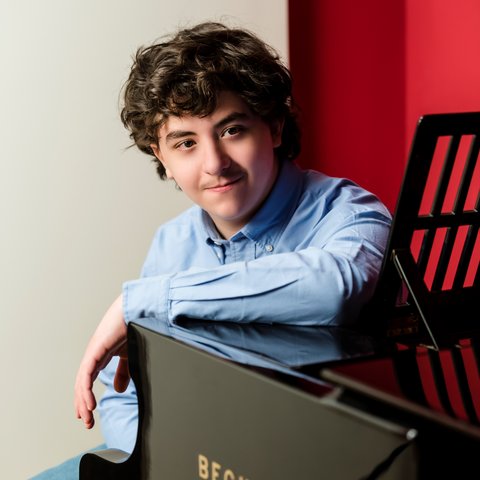
The Georgian pianist and composer Tsotne Zedginidze (born 2009) comes from a family with a long musical tradition. His great-grandfather was the composer Niko Sulkhanishvili. He began playing the piano at the age of five with his grandmother, Nino Mamradze, and was already composing his first pieces by the age of six. At the age of ten, he gave his first recital in Tbilisi and performed Shostakovich’s Piano Concerto No. 2 with the Georgian Philharmonic Orchestra. This was followed by performances at the Vienna Konzerthaus, the Berlin Philharmonie and at festivals in Verbier and Lucerne. Since 2021, he has been supported by the Lisa Batiashvili Foundation and has collaborated with artists such as Daniel Barenboim, Alfred Brendel and Antonio Pappano. In 2024, Sir Simon Rattle invited him to perform works by Schoenberg, Bartók and Poulenc. In January 2025, his first symphony received its world premiere at the Mozart Week in Salzburg. He is currently studying at the Hanns Eisler Academy of Music in Berlin and at the affiliated Barenboim-Said Academy under Jörg Widmann and Sir András Schiff.
Benjamin Günst, violin
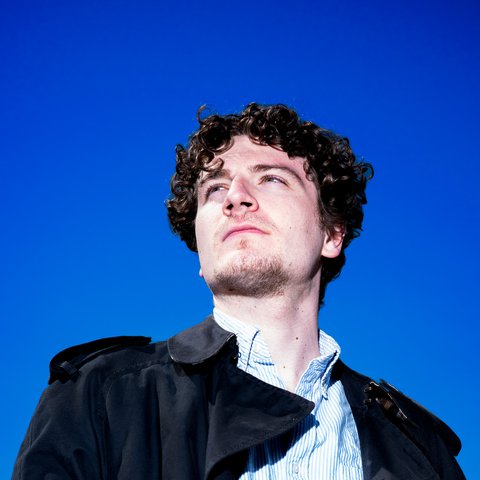
The violinist Benjamin Günst (born 2002) is one of the most promising musicians of his generation. After completing a preparatory course in Lübeck with Heime Müller, he has been studying with Antje Weithaas at the Hanns Eisler Academy of Music in Berlin since 2021. His most recent achievements include the German Business Music Prize 2026, as well as awards at the German Music Competition 2025 and the Max Rostal Competition 2024. Günst made his debut as a soloist at the age of just eleven. Since then, he has performed with orchestras such as the Berlin Radio Symphony Orchestra and the Kammerakademie Potsdam. As a passionate chamber musician, he has appeared as a guest at the Heidelberg Spring and the Beethovenfest Bonn (where he was named a Beethovenfest Talent in 2025) and has performed with partners such as Mischa Maisky and Daniel Hope. With the latter, he recorded the album DANCE! (Deutsche Grammophon) in 2024. The Deutsche Stiftung Musikleben, which has supported him for many years, has provided him with a violin by J. B. Guadagnini (Milan, 1756).
Lizi Ramishvili, cello
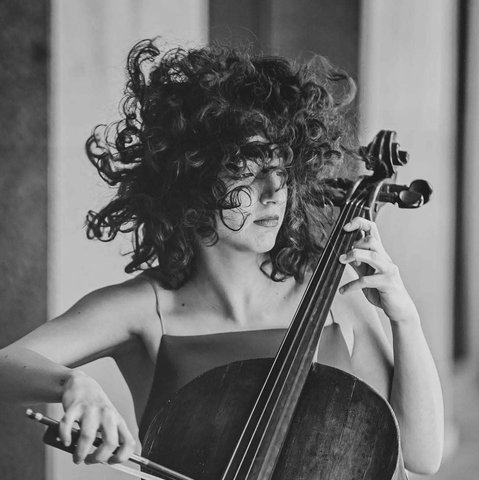
The Georgian cellist Lizi Ramishvili (born 1997) began her training in Tbilisi and later studied with Frans Helmerson at the Kronberg Academy and with Jens Peter Maintz in Madrid. Her exceptional talent was recognised early on with a number of prizes, including the Golden Nutcracker at the International Nutcracker Television Competition in Russia and the Tsinandali Award for Young Scholars and Artists. She has received scholarships from renowned foundations, including those of Mstislav Rostropovich and Boris Pergamenschikov. Her concert career has taken her to Carnegie Hall in New York and the Berlin Konzerthaus, as well as to festivals such as the Rheingau Music Festival, the Ruhr Piano Festival and the Schubertiade Schwarzenberg. Ramishvili has collaborated with artists such as Renaud Capuçon, Khatia Buniatishvili and Gianandrea Noseda. She has performed with orchestras such as the Deutsche Radio Philharmonie Saarbrücken Kaiserslautern. In 2021, she was included in Forbes Georgia’s 30 Under 30 list. Alongside her performing career, she is dedicated to training the next generation of artists.
Marija Tamkeviciute, harpsichord
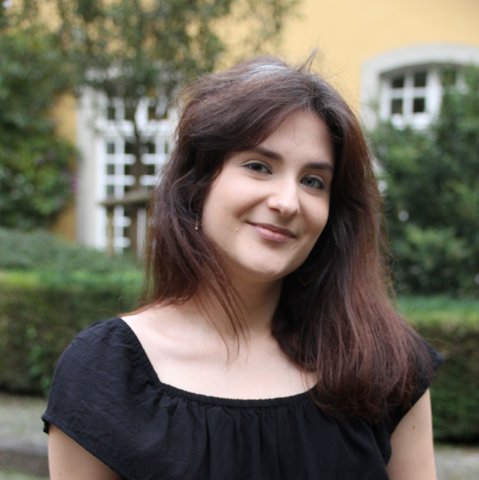
Marija Tamkevičiūtė (born 2000) is a Lithuanian harpsichordist and pianist. In 2017, she was awarded a full scholarship to Chetham’s School of Music and, a year later, began her Bachelor’s degree, majoring in piano, at the Franz Liszt University of Music in Weimar. This year, she successfully completed her Master’s degree, specialising in harpsichord, and is currently undertaking a further Master’s degree, specialising in basso continuo. Tamkevičiūtė has won prizes at various international competitions and was a scholarship holder at the Mozarteum Summer Academy in Salzburg, the Society of Friends and Patrons of the Franz Liszt University of Music in Weimar, and the Deutschlandstipendium. As a soloist, she has performed at venues including Stoller Hall, the Biblioteca Joanina, the Wiener Saal and the Kurhaus Palanga. As a harpsichordist and pianist, she has performed with ensembles and orchestras such as the Thüringen Philharmonie Gotha-Eisenach, the Varna International Ballet & Orchestra and various Baroque ensembles.
Mirian Khukhunaishvili, Artistic Director
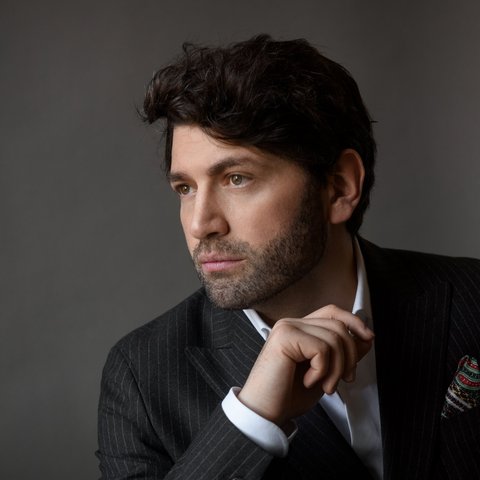
Mirian Khukhunaishvili is Music Director of the Wrocław Opera, Principal Conductor of the Elbląg Chamber Orchestra, and co-founder and director of the Tbilisi Youth Orchestra, which he has developed into a leading force in Georgian cultural life. He has appeared as a guest conductor with renowned orchestras such as the Konzerthausorchester Berlin, the Danish National Symphony Orchestra and the Iceland Symphony Orchestra. In doing so, he has collaborated with soloists such as Eliso Virsaladze, Christian Tetzlaff and Anastasia Kobekina. As the first recipient of the Ringmann-Jaross Prize, he is mentored by Christoph Eschenbach. Further honours include the Paavo Järvi Prize from the Conductors’ Academy of the Tonhalle Orchestra Zurich. Khukhunaishvili assisted Klaus Mäkelä and stood in for the Royal Concertgebouw Orchestra in Amsterdam. After completing his Master’s degree in Tbilisi, he obtained his PhD in conducting from the Kraków Academy of Music in 2020. From 2021 to 2024, he also taught conducting at the Iceland University of the Arts.
Tbilisi Youth Orchestra
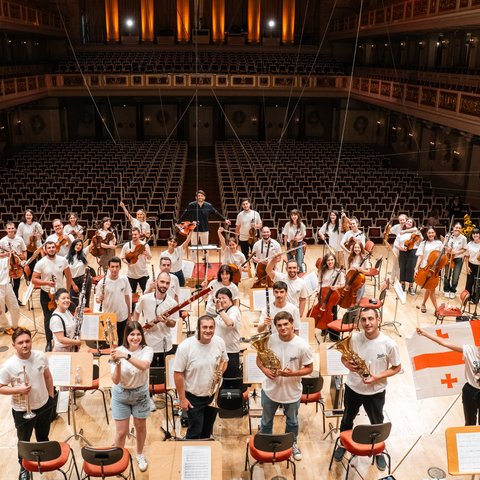
The Giya Kancheli Tbilisi Youth Orchestra (TYO) was founded in 2019 by Mika Mdinaradze and Mirian Khukhunaishvili. As Georgia’s only youth orchestra, it offers young musicians training of the highest standard. Each year, it presents an ambitious season comprising ten to twenty full-length concerts, which have garnered both national and international acclaim. The ensemble has already collaborated with world-class artists such as Paavo Järvi, Gidon Kremer and Anastasia Kobekina. Beyond classical music, the TYO reaches out to a diverse audience through projects with Anna Meredith and Worakls. Since 2024, the orchestra has served as the resident ensemble of the Toradze International Music Festival. International tours have already taken the musicians to the Berlin Konzerthaus and the Liederhalle in Stuttgart. Two invitations to the Berlin festival Young Euro Classic attracted particular attention. Future highlights include participation in the Beethovenfest Bonn and collaborations with Gianandrea Noseda and Eliso Virsaladze.
Bundesjugendorchester
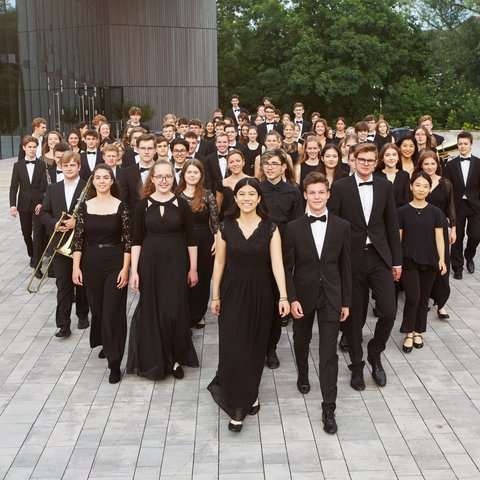
The German National Youth Orchestra is Germany’s youngest top-tier orchestra for young musicians aged between 14 and 19, and the Berlin Philharmonic’s partner orchestra. It was founded in 1969 by the German Music Council. Conductors such as Andris Nelsons, Ingo Metzmacher and Kirill Petrenko have already taken to the podium here; soloists have included Christian Tetzlaff, Tabea Zimmermann, Sting and Peter Maffay. Sir Simon Rattle has been the Federal Youth Orchestra’s conductor-in-residence since 2018. The orchestra has toured throughout Europe, North and South America, Asia and Africa. As part of the Campus Project organised by the Beethovenfest Bonn and Deutsche Welle, it supported the establishment of the National Ukrainian Youth Orchestra in Ukraine. It also supported music education initiatives in the South African township of Soweto. The highlight of the pandemic-stricken year 2020 was a video production of Ludwig van Beethoven’s 7th Symphony, conducted by Beethoven specialist Paavo Järvi.
Bundesjugendchor
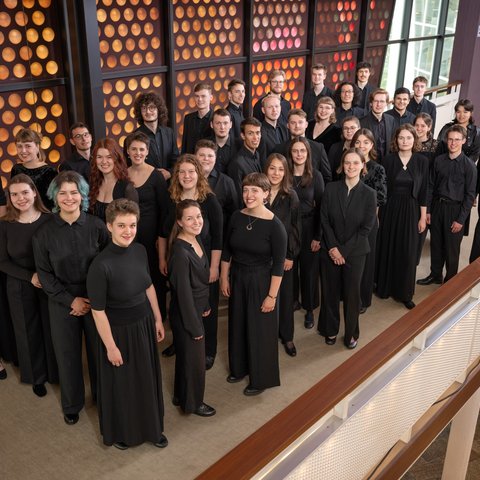
Around 50 outstanding young singers in the Federal Youth Choir rehearse challenging programmes ranging from the Renaissance to the present day. Under the artistic direction of Anne Kohler, the ensemble has established itself as a fixture since its inaugural concert in 2021 at the Berlin Philharmonie. Its work is complemented by guest conductors and collaborations with partners such as the SWR Vocal Ensemble and the Eric Ericson Chamber Choir. A key focus is on international exchange and cross-genre projects, such as the choreographed programme PAX – Chor in Bewegung. Guest performances have taken the choir to the Elbphilharmonie in Hamburg, St Thomas’ Church in Leipzig, as well as to Wrocław and Stockholm. The ensemble also makes guest appearances at festivals such as the Heidelberg Spring and the Ansbach Bach Week. The Federal Youth Choir is funded by the Federal Ministry for Family Affairs, Senior Citizens, Women and Youth.
Concert tips
Festival community
Festival Community Care
We – the Beethovenfest Bonn – invite you to celebrate the Beethovenfest in open cooperation and to work respectfully. To this end, we ask that you treat one another with consideration: before, behind and on stage.
Should any instances of inappropriate behaviour arise, an internal point of contact is available for audience members, artists and staff.
You can contact us via a telephone helpline (+49 228 2010321, available daily during the festival from 1 pm to 9 pm) or by email (awareness@beethovenfest.de).
Our values and principles governing our interactions, as well as further external contact details, can be found here on our website.


The Beethovenfest Bonn 2026 is held under the patronage of the Minister-President of North Rhine-Westphalia, Hendrik Wüst.
Programme booklet editors:
Sarah Avischag Müller
M Hornauer
The texts by Nana Sharikadze are original contributions to this programme booklet.