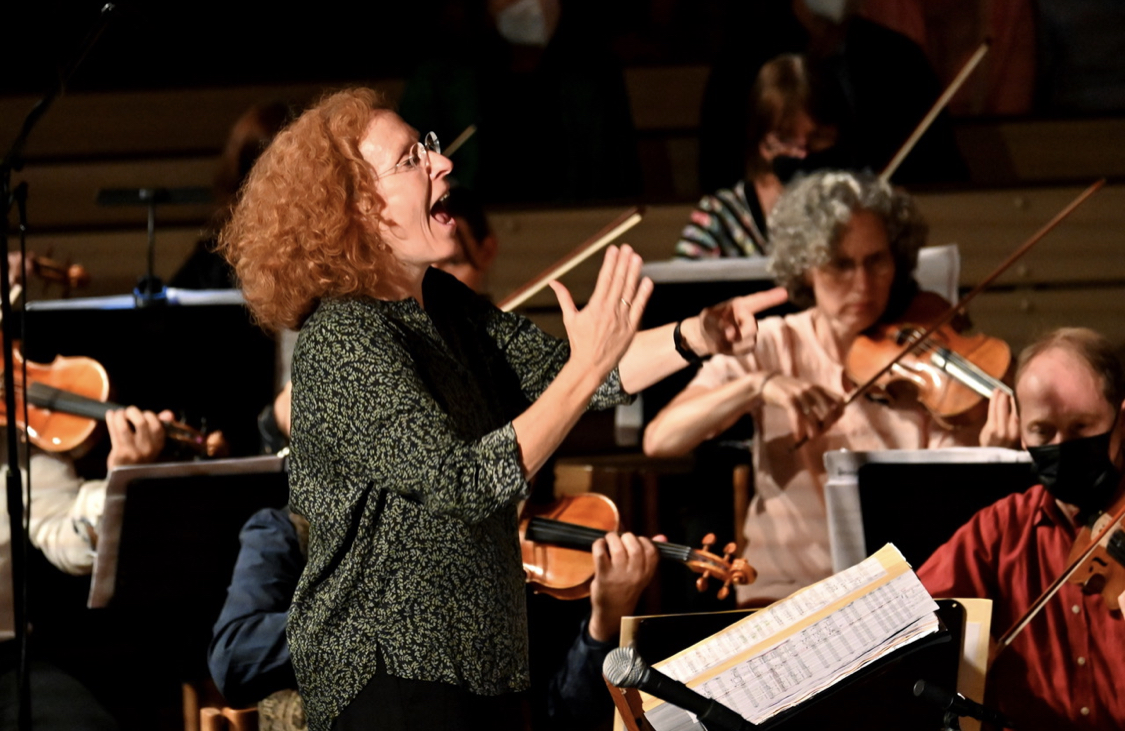
Karin Freist-Wissing, Director of Church Music at the Kreuzkirche in Bonn, has big plans for the 2026 Beethovenfest. She is leading a major project involving four ensembles, including her chamber choir Vox Bona, centred on Bach’s last great vocal work. In a brilliant collaboration with the Bonn-based jazz pianist Marcus Schinkel, a re-composition of the »Mass in B Minor« is taking shape under the new title Missa Morphosis. Here she explains how much of Bach and how much of Schinkel can be heard in the work, and how Vox Bona is approaching this jazz experiment.
How did the project come about?
I’ve known Marcus Schinkel for a long time; everyone knows each other in the Bonn music scene. Our first collaboration was the project Credo in unum mundum, where, as part of the 2022 Beethovenfest, he arranged Beethoven’s Missa solemnis into a jazz version for my choir and my symphony orchestra at the Kreuzkirche. I then wanted to do something together again and came up with Bach’s »Mass in B Minor«. For me, it’s one of the pinnacles of the musical canon. I then suggested this to the artistic director, Steven Walter – he’s always up for a bit of madness, after all. That’s how the Missa Morphosis project came about.
What is it about the »Mass in B Minor« that makes it suitable for a jazz arrangement?
One reason might be that Bach is incredibly rhythmic. And this is particularly true of the »Mass in B Minor«: the fast fugues, for example »Cum sancto spiritu«, really pack a punch, with the trumpets and timpani. The choir also has a rhythmic, percussive sound, created by syncopation and shifts in the rhythms. Or take the fast fugue in »Pleni sunt coeli« at the end of the Sanctus – it sounds like an interlaced duple and triple metre, it’s mad. That’s a great place to start with jazz drumming.