• Programme & Tickets
  • Beethoven Spring
  • Magazine
  1. Magazine

Marcus Schinkel gives the »Mass in B minor« a jazz twist

»I’ve never been able to cope with pigeonholing.«

    • #read
    • #Interview
Link was copied to your clipboard
Marcus Schinkel © Lars Figge

Bach’s monumental »Mass in B minor« is being staged at Beethovenfest in a new jazz arrangement by Marcus Schinkel: as »Missa Morphosis«, performed with his trio, the Bonn-based choir Vox Bona, the B’Rock Orchestra and the vocal quintet The Real Group. Here, the Bonn-based pianist and composer talks about his early days, caught between two worlds, and his engagement with Bach.

You keep making a name for yourself with extraordinary projects in which you reinterpret well-known classics through the lens of your jazz background. When did this desire to alter the established begin for you?

When I think back to my piano lessons, when I was about ten years old: that’s when I started altering these little pieces by Haydn and Beethoven, without really realising it. I had a cassette recorder; I’d press ›record‹ and try to record proper introductions for my pieces: »This is WDR 0!« Just with that introduction, I’d already altered Beethoven. Jazz music thrives on change, after all. In the 1950s and 1960s, it was musical theatre hits or pop songs that jazz musicians took up.

When did you realise that you wanted to continue down this path as a professional?

I completed my jazz studies in Arnhem, in the Netherlands, in 1993. I was just one pianist amongst many. During that time, I was forced to think about what actually defines me. Classical music had always been in my DNA. In 1999, I had a stroke of luck: I was asked if I could play – Beethoven – at the closing ceremony of the German Bundestag in Bonn. And that’s when it all clicked for me. I gave »Für Elise« and the »Moonlight Sonata« a jazzy twist. And from then on, things progressed bit by bit.

Do you think the term ›crossover‹ accurately describes what you do?

I describe myself as a crossover pianist because I’ve never been able to fit into a single category. I used to play rock in jazz bands and classical music in rock bands. And everyone used to look at me strangely. So ten years ago I started saying: I’m no longer interested in boundaries. Music connects people and transcends so many boundaries. It is my heartfelt wish to break down barriers and reach every person in the world.
Um Inhalte zu laden, akzeptieren Sie bitte als externe Quelle in den Cookie-Einstellungen Accept

Have you ever come across a classical piece that you were too in awe of to simply start arranging it?

Actually, that was exactly my initial reaction to Bach’s »Mass in B minor«. When I heard the Kyrie for the first time, I thought: OK, I’m out. But then I started listening to the piece on a loop and wondered: what is this doing to me? That’s how I eventually arrived at the first draft of the arrangement: to begin with, I simply isolated the male voice and left it on its own. And that was almost like a Buddhist meditation.

How did you go about arranging the B minor Mass?

I can’t orchestrate myself. I arrange on the computer: I take the originals and loop them. Then I can insert my own elements there, such as question-and-answer sections. But I can also stretch or compress the loops. Or transpose them into a different key, as in jazz. That produces very modern, new effects. On top of that, there are improvised sections that I don’t compose in advance.

Um Inhalte zu laden, akzeptieren Sie bitte als externe Quelle in den Cookie-Einstellungen Accept

Are there any particular styles that your arrangement draws on?

The Dona Nobis Pacem now has a gospel feel to it. The Agnus Dei reminded me of a French film from the 1970s; that’s what I’ve brought out in it. The Gloria is very rhythmic and archaic, with fifths like in the Middle Ages. I heard a sort of flamenco-style piano in it and incorporated that.

What, for you, is the message of Bach’s »Mass in B minor« and your work on »Missa Morphosis«?

There’s so much uncertainty in Germany at the moment. A dear colleague of mine, the trumpeter Markus Stockhausen, said this wonderful sentence: »You can only create peace within yourself. And through this peace, you can, like a stone thrown into water, create ripples and reach others.« And that is also why there are so many reflections on peace in Missa Morphosis. There are In Terra Pax and Dona Nobis Pacem, and I have also incorporated Luther’s chorale Verleihe uns Frieden gnädiglich and John Lennon’s Give Peace a Chance.

Marcus Schinkel beim Festival

Sun. 27.9.2026
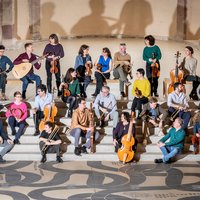
  • A group of musicians in colourful clothing is sitting on different steps of a broad staircase. Everybody is holding their instruments and talking animatedly.
    19:30, Beethovenhalle, Great Hall

    Missa Morphosis

    Vocal, Cross-Genre

    B’Rock Orchestra, Marcus Schinkel Trio, The Real Group

    Bach/Marcus Schinkel

private
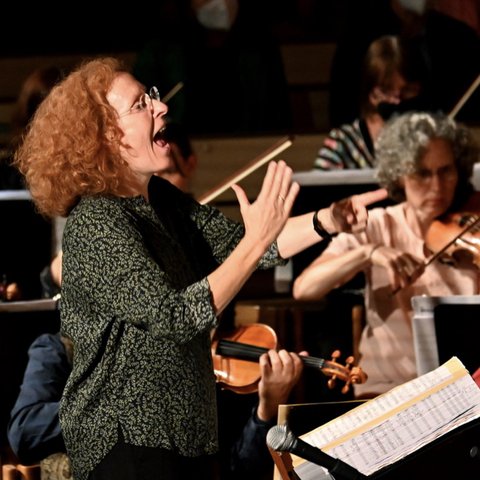
Karin Freist-Wissing © private
Want to learn more?

Conductor Karin Freist-Wissing

The choir director of Vox Bona talks about the rehearsal process for the »Missa Morphosis« and Bach’s spiritual messages.
Interview
Article by Steffen Greiner
Ticket Hotline +49 228 2010344 Mon, Wed–Fri, 10:00–14:00
Subscribe to Newsletter
  • Barrier-free access
  • Contact
  • Press
  • Newsletter
  • Team
  • Jobs
  • Calls for Submissions
  • Festival archive
  • CO₂-Compensation
  • Imprint, terms & conditions, privacy
  • Declaration of compliance
  • Cookie settings
  • Deutsche Post DHL Group
  • Telekom
  • Sparkasse KölnBonn
  • Deutsch Welle
  • Stadt City Ville Bonn