The closing concert of the Beethoven Spring commemorates the anniversary of Beethoven’s death with his Ninth Symphony: a work that extends far beyond his death. Featuring a distinguished line-up of Beethoven specialists led by Jan Caeyers and the Arnold Schönberg Choir from Vienna.
Sat. 3.4.2027
19:30, Beethovenhalle, Great Hall
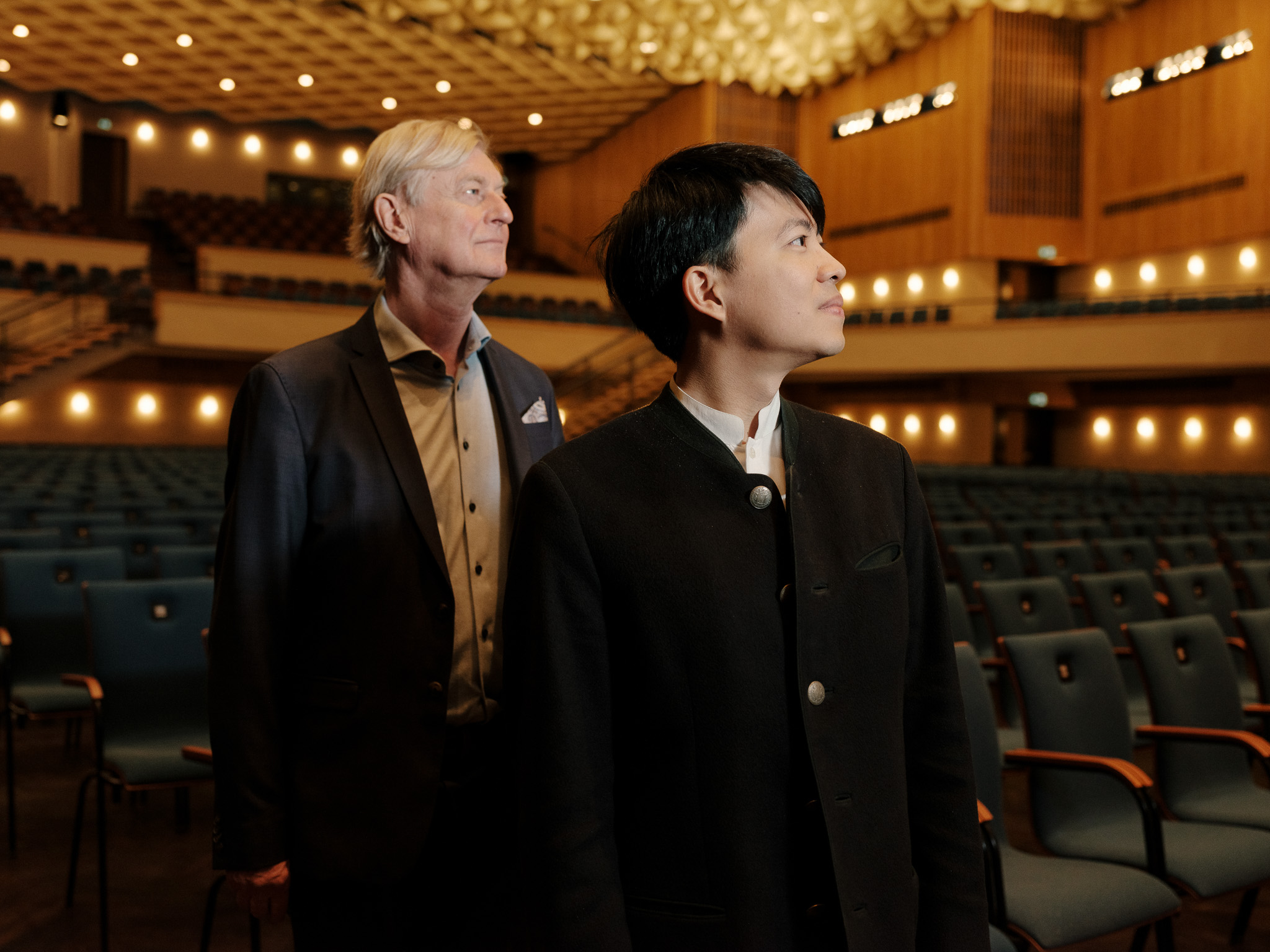
Kit Armstrong & Le Concert Olympique VI
- Chamber Orchestra, Piano
- € 89 / 69 / 49 / 39 / 29 / 19
Contributors
- Le Concert Olympique
- Arnold Schönberg Choir Vienna
- Erwin Ortner choir master
- Kit Armstrong piano
- Jan Caeyers conductor
Programme
»A Message to the World«
***
Johann Sebastian Bach
Prelude and Fugue No. 2 in C Minor BWV 847 from The Well-Tempered Clavier vol. I
Ludwig van Beethoven
from Bagatelles op. 119: No. 2 in C Major, No. 4 in A Major, No. 8 in C Major
Ludwig van Beethoven
Fantasy for Piano, Choir and Orchestra in C Minor, op. 80
Ludwig van Beethoven
Symphony No. 9 in D Minor, op. 125
The concert at at glance
What can I expect?
What does it sound like?
Description
The Ninth, his final symphony, brings the festival marking the 200th anniversary of Beethoven’s death to a close – the work through which his influence has endured most powerfully beyond his death. For conductor Jan Caeyers, a completely new conception of the symphony emerges here. It is no coincidence that, prior to this, no symphonies had come out from Beethoven’s workshop for almost ten years. Caeyers sees the new symphony as the first to be »oriented towards the future«: the instrumental genre evolves into a message to the world, blurring the boundaries between cantata and oratorio.
It is fascinating to note that Beethoven had already been experimenting with this blurring of boundaries a decade and a half earlier: in the »Choral Fantasy«, he blended elements of the piano concerto, the cantata and the symphony – and even laid the groundwork for the famous »Ode to Joy« melody. The »Choral Fantasy« celebrates the beauty of art as a means of improving humanity and the world. A few years before his death, Beethoven elevated this statement to a universal truth in the Ninth Symphony and ensured his immortality.
Kit Armstrong intersperses the programme with some of the enigmatic Bagatelles. This miniature form was among the last genres the composer explored.
More info


