• Programme & Tickets
  • Beethoven Spring
  • Magazine
  1. Magazine

5 Questions for ...

Quatuor Ébène

    • #read
    • #Interview
Link was copied to your clipboard
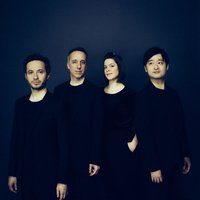
Quatuor Ébène © Julien Mignot

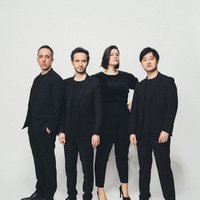
A Beethoven cycle by those with a special calling: the French Quatuor Ébène talks at length about its relationship with the composer and its anticipation of the residency at Beethovenfest 2026.

The motto of this year’s Beethovenfest Bonn is »Home«. What does this mean to you in regard to your connections with the Beethovenfest in his birth town as well as to your relationship to Beethoven’s string quartets? Are they a natural home for you? 

Bringing Beethoven back to his hometown is a sacred mission that we will strive to honour to the best of our ability! Of course, playing Beethoven’s quartets in the place where the genius was born has a special flavour all its own. We already had the privilege of receiving an invitation to reside in Bonn in 2022, and we are so happy to be able to participate in this complete cycle for our new residency in 2026!

If we can say that we feel ›at home‹ with Beethoven, it is mainly because he has been part of our daily lives since our beginnings. His works are the richest literature for the string quartet formation, and we even spent our lives exclusively with him when we had to put together the complete works for our 2019 recording project. We felt then that the composer was like a big brother, a father, or at least a member of the family who watched over our rehearsals to make sure we didn’t go astray, to make sure we were on the right path. We went through every human emotion with him. His standards are so high that we had to rise to the level of his language, so we learned to master it as best we could, year after year. Today, we feel that we know him a little better and feel closer to him. But it would be pretentious to believe that we feel ›being at home‹ with his music, which is an inexhaustible source of discovery!

With our new cellist, Yuya, we have to revisit Beethoven’s complete works this year, and we are immersing ourselves in this literature as if it were the first time. It is exciting and exhilarating, and it is the main reason why we do this job: to constantly reinvent ourselves, to get as close as possible to the truth, without ever feeling that we have reached our goal, without ever feeling ›at home‹.

You will present the first half of a complete Beethoven String quartet cycle, but not chronologically. Instead you play quartets from all his periods. Why did you choose this order?

In order for the listener to fully experience the composer’s range, it is more enjoyable to play different works within the same concert that correspond to different moments in his life. Furthermore, for us as performers, playing Opus 18 in a row or the last quartets in a row seems a little indigestible.

We have put together these programs by imagining which opus could go with another, which key could blend with another... If we are only going to play part of the cycle, we might as well represent the composer’s broadest identity in order to do justice to his entire body of work!
Um Inhalte zu laden, akzeptieren Sie bitte als externe Quelle in den Cookie-Einstellungen Accept

Your Beethoven cycle in 2019/20 was a project in six continents. Has that global approach changed your view on the works?

We wanted this titanic project to reflect the composer’s ideal of brotherhood among peoples. By traveling to all these continents, carrying his music with us and playing it for all these different cultures, we felt that we were getting as close as possible to the essential message conveyed by Beethoven’s thinking. 

Even more than our musical approach, it was our profound humanity that was deeply moved by this long journey. So many memories punctuated our year-long trip, and we now associate certain quartets with specific moments in this odyssey. The Kenyans’ reaction to Opus 18/4, the Maori’s reaction to the scherzo from Opus 95, the great Fugue in Japan ...

It is often said that performing Beethoven’s complete works is like climbing Everest. You feel different, as if you have discovered a whole new landscape. We can definitely no longer play this music in the same way after this unique experience.

The Beethoven anniversary in 2027 will be a major challenge for you, as you present several cycles in concert halls all over the world. Do you never get tired of Beethoven?

To prepare and to play the full Beethoven cycle will always represent a huge challenge: more than eight hours of the most intense and demanding music (as emotionally as technically and intellectually speaking) changes your life in many ways. 

In 2019/20 we recorded all Beethoven quartets around the world, but we were also supposed to play a lot of full cycles. Because of Covid those concerts never took place, and as far as we remember we could only play one complete cycle, in Bruges. It was of course very frustrating. That’s why these new incoming cycles in 2026/27 represent for us a true revenge against Covid! 

Getting tired of Beethoven is something that will never happen. Physically tired for sure, we have to be prepared like athletes, but losing the desire to play this music is simply impossible, for so many reasons that several books could be written on the subject… in a few words: Cosmos, metaphysical, incredibly visionary, as elegant as Mozart, as playful as Haydn, as structured as Brahms, as romantic as Schumann, as contrasted as Bartok… and behind this serious face: as fragile and emotive as every human being.

Um Inhalte zu laden, akzeptieren Sie bitte als externe Quelle in den Cookie-Einstellungen Accept

Is there a particular favourite in the Beethoven Quartets which you regard as your signature piece?

Choosing just one of Beethoven’s 16 quartets looks like an offense to the other 15. Every rehearsal, every opus worked on, every line analysed makes us realize how profound and monumental his work is.

But if we want to play the game, perhaps we could mention the Opus 130, including the Great Fugue Opus 133. Formally speaking, this quartet breaks with classical form. Spiritually, it pushes the boundaries of modernity, moving from vigour to the gentlest tranquility, from gigantism to the most total interiority and the most poignant emotion. The Great Fugue, for its part, is the best example of breaking the rules and testing one’s strength: how can a quartet sound as powerful as an orchestra? This music, composed just 200 years ago, was inconceivable to the people of this era because it was actually centuries ahead of its time. Playing it for us musicians is comparable to the kind of trance you probably feel when you’re in a rock band!

The residency at Beethovenfest 2026

Fri. 25.9.2026
  • Four individuals in dark clothing stand against a dark background. They look seriously into the camera.
    19:30, Kleine Beethovenhalle, Muffendorf

    Beethoven String Quartet Cycle I

    Chamber Music

    Quatuor Ébène

    Beethoven

Sat. 26.9.2026
  • 19:30, Kursaal Bad Honnef

    Beethoven String Quartet Cycle II

    Chamber Music

    Quatuor Ébène

    Beethoven

Sun. 27.9.2026
  • 16:00, Beethovenhalle, Studio

    Beethoven String Quartet Cycle III

    Chamber Music

    Quatuor Ébène

    Beethoven

Article by Kerstin Schüssler-Bach
Ticket Hotline +49 228 2010344 Mon, Wed–Fri, 10:00–14:00
Subscribe to Newsletter
  • Barrier-free access
  • Contact
  • Press
  • Newsletter
  • Team
  • Jobs
  • Calls for Submissions
  • Festival archive
  • CO₂-Compensation
  • Imprint, terms & conditions, privacy
  • Declaration of compliance
  • Cookie settings
  • Deutsche Post DHL Group
  • Telekom
  • Sparkasse KölnBonn
  • Deutsch Welle
  • Stadt City Ville Bonn