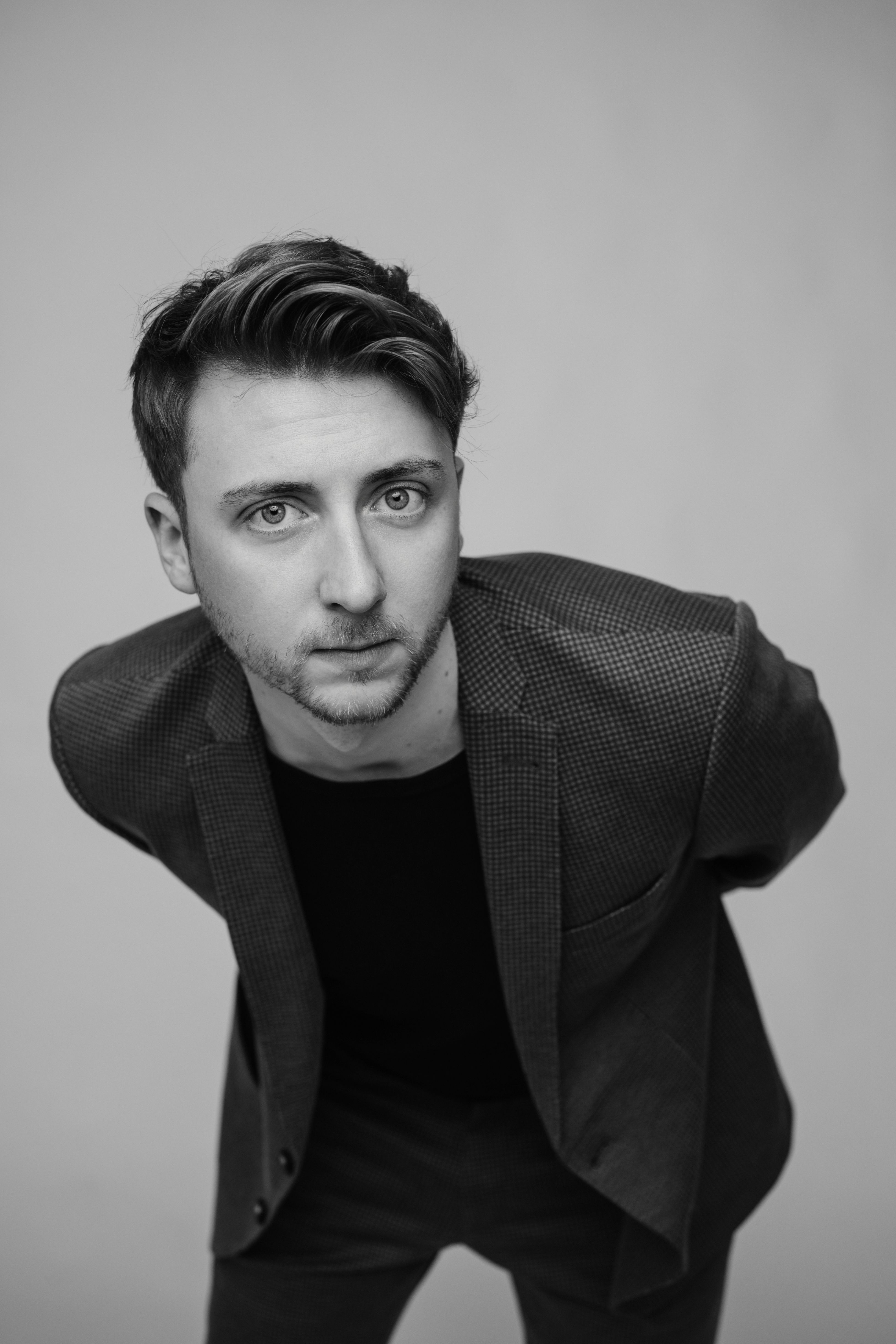
In his mid-twenties, he has already achieved a great deal in the world of singing. Now the up-and-coming baritone from Lower Bavaria is coming to Beethovenfest – as the winner of the coveted German Business Music Prize. In this interview, Jonas Müller reveals how one becomes a singer, how one remains one, and what matters when choosing a piano accompanist.
How did you discover your voice?
I have a background in boys’ choirs. I attended a grammar school with music focus in Niederalteich (Lower Bavaria), which is part of a monastery with a boys’ choir. My musical journey began even earlier, though: I started playing the piano when I was about five. It became clear relatively quickly that I had a talent for music. We had a very good music teacher at primary school. She put on a children’s musical with us, in which I sang my first major role: the witch Lisbeth. It was marvellous. My mum told me she was absolutely flabbergasted because even back then – to put it bluntly – I was a real show-off, in Year 2 or Year 3. I actually realised for the first time that I wanted to be a singer when I was 15, during an experience with the school big band. I was given the chance to sing as a soloist for the first time in front of 1,000 people at a big concert organised by the four arts-focused grammar schools in the Deggendorf district: Michael Bublé’s It’s a Beautiful Day. I’ve never been that nervous in my life again. But then I had that classic ›aha‹ moment: I sang the first note and knew that this was my stage. That’s when I thought: this could be something for me.
Did your family support you on your journey into music?
I’m the only professional musician in the family. But I come from a family with an interest in music. My father is a very passionate saxophone player, and my mother used to enjoy singing in a choir. My older sister learnt to play the piano. That was also the reason why we had a piano and why I wanted to learn in the first place. And although I grew up in the countryside, my grandparents took me to the opera in Passau – that was about 50 kilometres away.
Did you realise early on that you wanted to pursue this professionally and study it?
It was clear that I wanted to make music. But what exactly? I also considered whether I should study the piano after all. I had singing lessons with my choir director. He encouraged me to try out for the audition at the Würzburg University of Music. I applied as a tenor. The professor then said to me: »Would you rather be a tenor who’s always struggling with the high notes, or a baritone with a great high register?« Thank goodness I chose the path of a baritone. I started when I was 17, because I’d finished my A-levels early thanks to the G8 programme. But I didn’t want to commit myself straight away: I knew, after all, that the music business is a tough world, and I wanted to see if it was right for me. After two years, I realised that I could keep up and that there were prospects for the future.