• Programme & Tickets
  • Beethoven Spring
  • Magazine
  1. Magazine

Barak Schmool about his premiere

Reciting poems on the drums

    • #Interview
    • #read
Link was copied to your clipboard
Barak Schmool © private

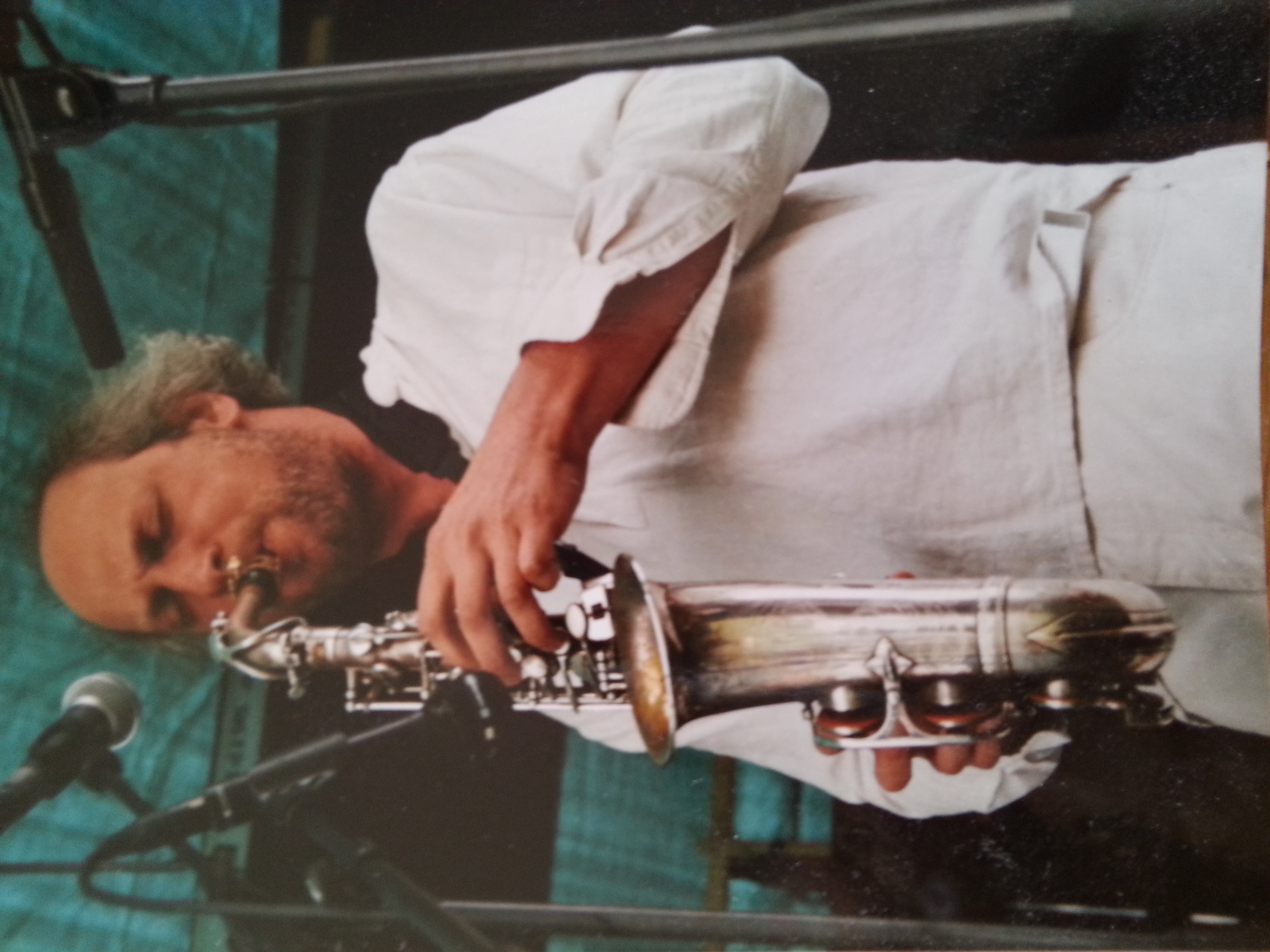
London based composer and multi-instrumentalist Barak Schmool has been studying the musics of the world since childhood. A perfect match for travelling percussion maniac Bernhard Schimpelsberger. At Beethovenfest, Schmool’s new percussion concerto will be premiered together with Beethoven Orchester Bonn.

You are a composer and musician of many musical genres. How did you acquire these diverse interests and skills? What is your musical home? 

Barak Schmool: My home was pretty diverse already. I come from a Jewish family of complicated descent, where three or four languages are spoken. So I was exposed to different musical cultures early on. In London, where I grew up, you’re surrounded by people from other parts of the world. I heard Indian music every day, through the wall from my neighbours. Later, whenever I had opportunity to study music from other places, I did: varieties of African music, Cuban music, Brazilian music, music from Peru, from different parts of the Balkans. So do I have a home? Maybe I used to have one in my jazz groups. But this home is connected to London, that means it’s a diverse home.

What are your instruments?

I studied saxophone at the Royal Academy of Music. But whilst I was there I took up percussion. I had lessons in tabla with a very famous family of Indian musicians. My teachers were the sons of Imrat Khan, a top sitar player. I also studied Brazilian, Cuban and African percussion in general, but particularly different cultures from Ghana. I even played for the president of Ghana and for the Ghanaian football team.
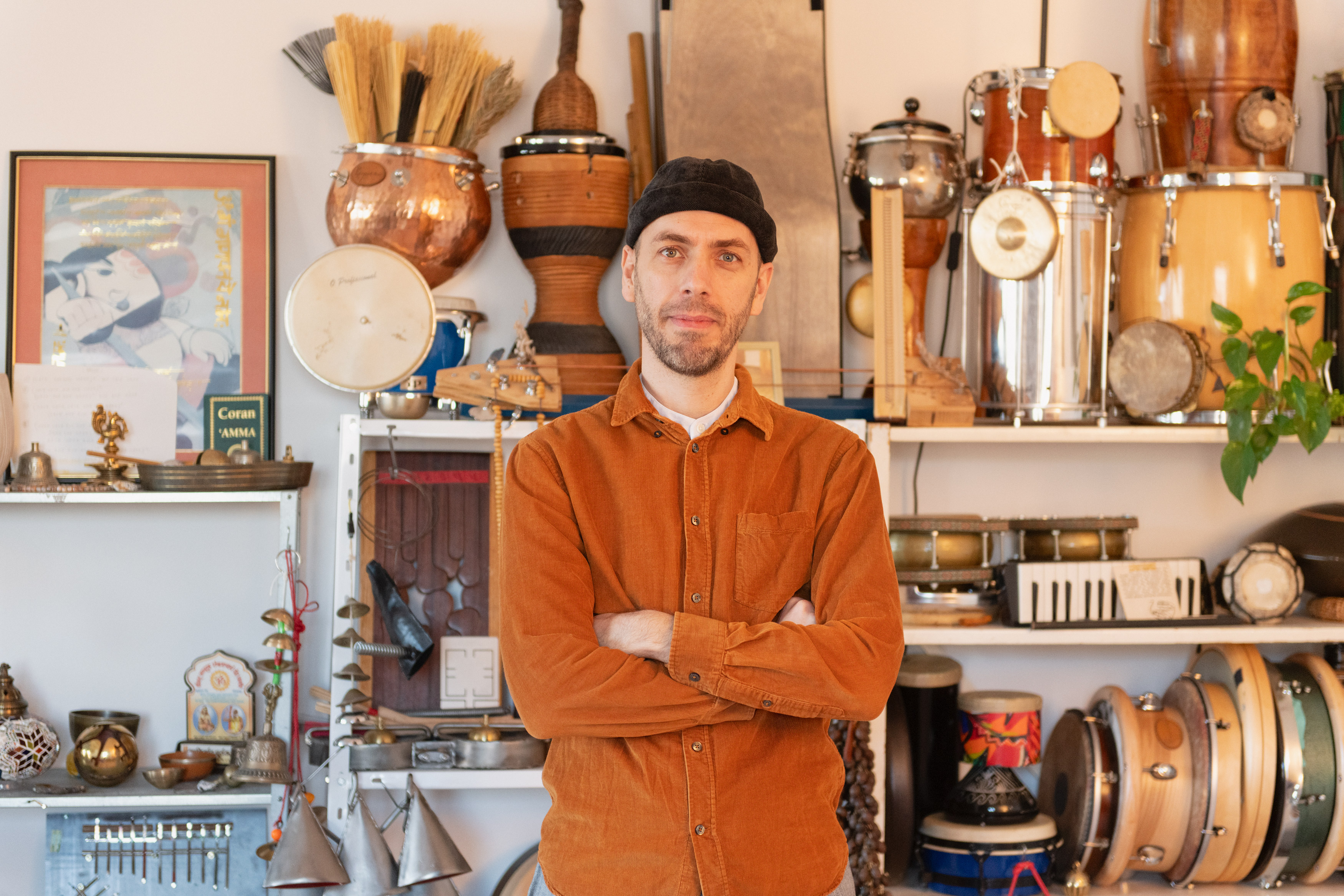
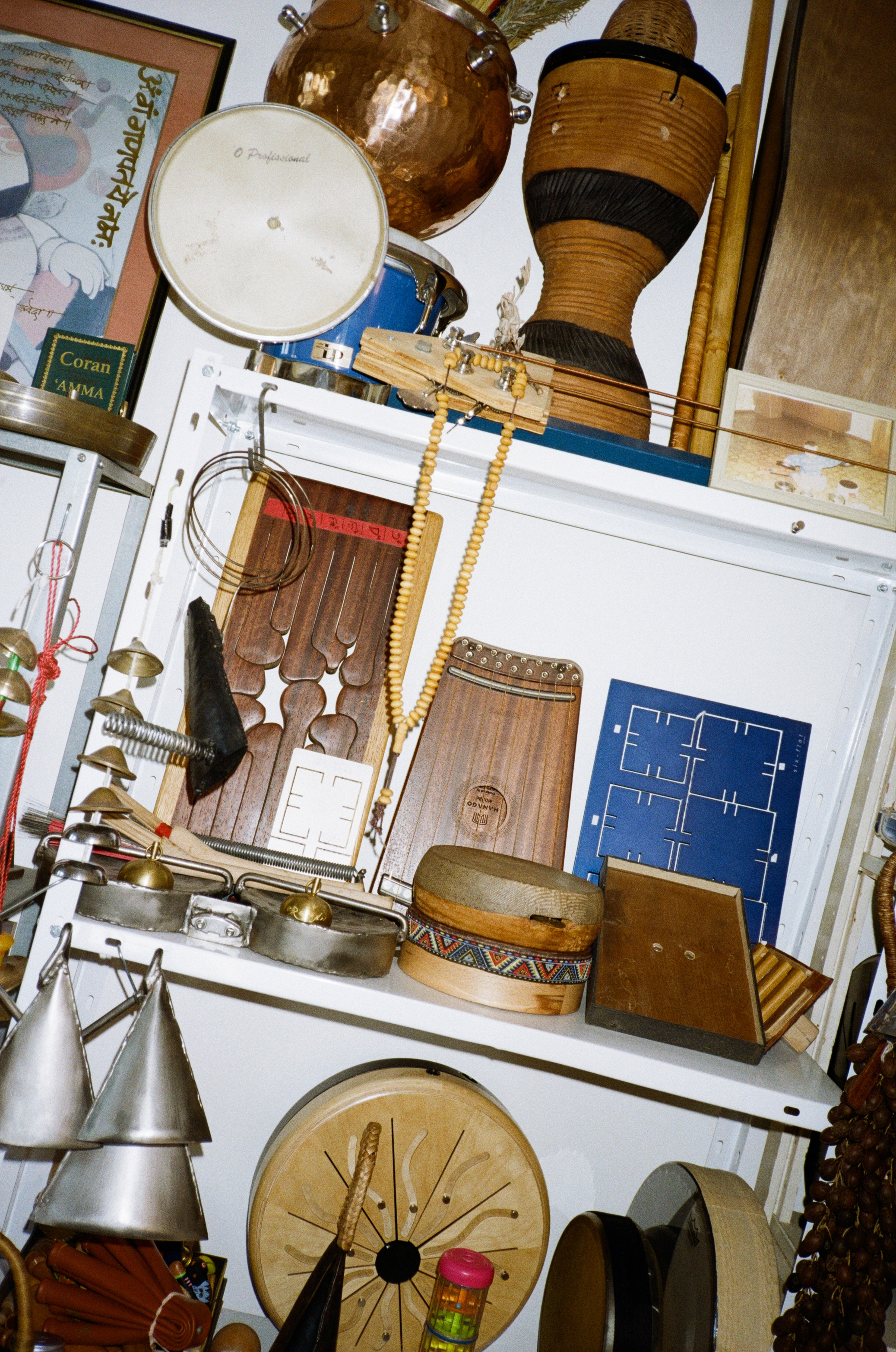
Bernhard Schimpelsberger in front of is percussion wall © Martina Lajczak

How do you know Bernhard Schimpelsberger and why did you decide to compose a new concerto for him?

I met him when he was living in London, some time ago. We were both studying Indian music there. I remember we had a little jam. For that, I tried to write something which would meet my interests of structuring percussion music in a particular way – and also his interests in North Indian aesthetics. I remember that we weren’t being very successful back then (we laughed about it recently). Some years later, I wrote a commission for his friend Abel Selaocoe, the South African cellist (Anm. d. Red: Abel Selaocoe war ebenfalls Beethovenfest Fellow, im ersten Jahrgang 2023). Maybe he heard it and thought I should be writing for him, because I was engaged with different rhythmic cultures from around the world. Bernhard himself had been travelling and I followed his Rhythmic Diaries content on Youtube, where he shared what he encountered. He then approached me with a complete shopping list for the composition that said, »I want this and this and this«. And I thought about whether I could make a story out of it.

The new percussion concerto is called »Great Circles«. Please explain this title!

In English, a »great circle« is a line around the globe, like the equator or a meridian. Places are joined in direct lines in this way, for example for aeroplanes. I imagine the piece like drawing a great circle to connect musical places. Bernhard wanted something from Brazil and from Africa, because he wanted a challenge: He wanted to learn about African solo drumming – as it’s completely different from what he studied in India. I had to pick an arbitrary place in Africa, but I cheated. I use harmony from Tanzania and rhythm from Cameroon. Don’t tell anyone! From these places we continued the line through India to Indonesia. The piece is an imaginary journey rhythmically connecting these four cultures. Actually, they really do share connections: The cultures of Indonesia have commonalities with Madagascar and they also have genetical, religious and linguistic ties to parts of India. Musically, tThere are minimal connections between India and Africa, but there are plenty of connections between Africa and Brazil. So that are the four subjects of the piece – the four parts of the story refer to each other, share, develop and re-use material as the journey continues.

Percussion collection in Bernhard Schimpelsberger’s home © Martina Lajczak

What is the characteristic of each musical style of these countries?

Every culture has got a lot of variety. So, what I compose does not represent the whole country, just a certain aspect. Take Indonesia: It has 125 million people. It’s not a unified musical culture. I picked a ritual from Indonesia, music for the temple – that’s where we start our story. When we go to India, we’re dealing with art music, that would be heard in a chamber recital. When we’re in Africa in my imaginary country which is between Tanzania and Cameroon, we’re in a community dance setting. And that continues in Brazil.

How do you adapt these styles for orchestra? Are there going to be any traditional instruments in the piece?

I’m telling the story with the colours of the orchestra. So I’m not using traditional instruments from different places as much as I’m using structures and processes specific to these musics. It’s not about copying other styles as much as mapping the way people make a certain energy onto the orchestra. But there is one traditional instrument: In one section, Bernard will play his own design of a Kalimba. That is a thumb piano, a lamellophone from Africa. I’ve studied this instrument quite a lot, also the compositional practice that goes along with it. Bringing it into the orchestra is very exciting for me. I really love writing for it. And I don’t know any piece that has attempted this before. Other than this, Bernhard will be playing regular sorts of percussion, the drum set, different gongs, cymbals and shakers. 

What role does the percussion soloist have in the piece?

I’ve made a story that uses percussion in different ways so that it can express different things. It’s not only 30 minutes in the style of a drum kit solo from a rock band. There is a little bit of that, but it also does other things: providing atmosphere, a commentary, groove for dancing, being a soloist, being someone reciting a poem to you ... Bernard is all these people, he is going through different occasions in community life. Sometimes you’re at a party, sometimes you’re at a funeral. I exploit all kinds of sounds of the percussion. But it also takes on every role, not only as background or rhythmic base, but as a melody of a theme, which is challenging because Western audiences are not used to hearing it in this way. So, the percussion is really playing inside the orchestra, one time connecting with the oboe and another time with the trombone.

The premiere of Barak Schmool at Beethovenfest 2025

Fri. 12.9.2025
  • 19:30, Opera Bonn

    Bernhard Schimpelsberger & Beethoven Orchester Bonn

    Orchestra

    Dirk Kaftan

    Schmool, Berlioz

Article by Avischag Müller
Ticket Hotline +49 228 2010344 Mon, Wed–Fri, 10:00–14:00
Subscribe to Newsletter
  • Barrier-free access
  • Contact
  • Press
  • Newsletter
  • Team
  • Jobs
  • Calls for Submissions
  • Festival archive
  • CO₂-Compensation
  • Imprint, terms & conditions, privacy
  • Declaration of compliance
  • Cookie settings
  • Deutsche Post DHL Group
  • Telekom
  • Sparkasse KölnBonn
  • Deutsch Welle
  • Stadt City Ville Bonn