• Programm & Tickets
  • Beethoven Frühling
  • Magazin
  1. Magazin

#essay Gabriel Kahane

Being American

    • #lesen
Link wurde in ihre Zwischenablage kopiert
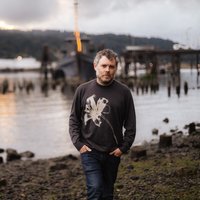
Ein Mann steht vot einem See auf einer Wiese, er trägt einen dunklen Pulli mit einer großen aufgedruckten Blüte in weiß. Er hat seine Hände in seine grauen Locken vergraben und schaut nach unten. Die Stimmung ist düster.
Gabriel Kahane © Jason Quigley

Gabriel Kahane ist einer von mehreren US-Musiker:innen im diesjährigen Festival – das 250. Jahr der amerikanischen Unabhängigkeitserklärung ist Anlass für einen Schwerpunkt. Wir haben den Singer-Songwriter, Komponisten und Essayisten um eine Momentaufnahme seiner Heimat gebeten. Wie fühlt es sich heute an, in Amerika Künstler zu sein? Sein Essay auf Englisch findet Worte für die Kontraste und Widersprüche seines Landes.

We are the land of Duke Ellington and Joan Didion. A nation of wide grins and quiet kindness, church potlucks and twilit baseball games. We are Aretha Franklin and William Faulkner, Susan Sontag and Leonard Bernstein, the Bronx is up and the Battery’s down! We are the bright lights of Broadway and street vendor hot dogs, cheap souvenir shops and the pre-9/11 skyline of Lower Manhattan, immortalized in movies dreamed into existence by Hollywood screenwriters on the opposite coast, where sunshine and sprawling orange groves played host to wellness quacks a full century before Robert F. Kennedy, Jr. set out to destroy the nation’s trust in modern medicine.

We are a people of suspicion and grievance, of gated communities and concrete prisons, of unequal justice under the law. A nation of razor-wired army bases on remote islands, of flashing police lights that portend death for those whose skin is the wrong color, of billionaire businessmen who step over the huddled unhoused on their way to thousand-dollar sushi dinners in gleaming architectural monstrosities in Chicago or San Francisco.

We are small towns with two-block main streets surrounded by grain silos and corn fields; we are summer vacationers awed by sandstone in the national parks of Utah, all burnished ochre against blue sky, God in the wilderness. And we are a nation rewriting its laws to permit the poisoning of our rivers and lakes, the air we breathe.

Um Inhalte zu laden, akzeptieren Sie bitte als externe Quelle in den Cookie-Einstellungen Akzeptieren

To be an American has always meant grappling with these contradictions. But in 2026, as my country has begun to terrorize immigrant communities and its own citizens while turning its back on allies abroad, the dissonance has reached a choke point. And it is against this backdrop of national crisis that I want to speak about my role as an artist.

For too long, our political coalitions have been constructed based on what we oppose, rather than what we are for. If we have been united by anything, it has been by contempt for each other. I believe that art can help us repair, both through explicitly political work, but also through the realm of abstraction, lyricism, and impressionism.

Um Inhalte zu laden, akzeptieren Sie bitte als externe Quelle in den Cookie-Einstellungen Akzeptieren

The two pieces that I’m presenting at Beethovenfest 2026 represent both approaches. The oratorio emergency shelter intake form featuring the Beethoven Orchester Bonn examines economic inequality through the lens of homelessness. A mezzo-soprano leads the listener on a wrenching tour of the bureaucracy and indignity that accompanies poverty in America, interrupted by the »Chorus of Inconvenient Statistics«, a sardonic trio which injects a touch of humor into the piece, while implicating the audience in the problem.

Elevator Songs is more fanciful. I’d been asked to write a »songbook« for the vocal band Roomful of Teeth – a tune for each singer – and landed on the concept of a magical elevator that moves the listener through an inter-dimensional hotel, where each room brings to life a character inhabiting a distinct temporal and geographic reality. Where composing for orchestra can be impersonal – we seldom know the musicians for whom we are writing – creating something for an ensemble like Roomful of Teeth is an act of community building.

Um Inhalte zu laden, akzeptieren Sie bitte als externe Quelle in den Cookie-Einstellungen Akzeptieren

And ultimately, community building is, as I see it, the highest calling for an artist. When we gather in a room, we may create an environment in which the complexity of every human life is illuminated. If the internet traffics in cheap binaries that sort us into competing monoliths, the concert hall invites us to reconnect with all that we share: our frailty, our better angels, and our capacity to love.

Gabriel Kahane beim Beethovenfest 2026

Fr 11.9.2026
  • 17 Uhr, Beethovenhalle, Studio

    Podiumsdiskussion: Ohne Zuhause

    Diskurs

    Prof. Dr. Christoph Butterwegge, Azra Zürn, Carolina Schrage

  • Ein Mann steht am Ufer eines Flusses, umgeben von alten Holzpfählen. Der Himmel ist bewölkt und es dämmert.
    19.30 Uhr, Beethovenhalle, Großer Saal

    Gabriel Kahane & Beethoven Orchester Bonn

    Orchester, Vokal

    Philharmonischer Chor der Stadt Bonn, Eliza Bagg, Dirk Kaftan

    Kahane, Dvořák

Sa 12.9.2026
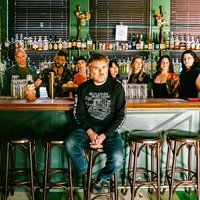
  • Eine Gruppe von Menschen, das Vokalensemble Roomful of Teeth, steht hinter einer Bar mit verschiedenen Flaschen im Hintergrund. Eine Person, Gabriel Kahane, sitzt auf einem Stuhl vorne.
    19.30 Uhr, Bundeskunsthalle, Forum

    Roomful of Teeth

    Vokal

    Gabriel Kahane

    Kahane, Shaw

Artikel von Gabriel Kahane
Ticket–Hotline +49 228 2010344 Mo, Mi–Fr, 10–14 Uhr
Newsletter abonnieren
  • Barrierefreiheit
  • Kontakt
  • Presse
  • Newsletter
  • Team
  • Jobs
  • Ausschreibungen
  • Festival-Archiv
  • CO₂-Kompensation
  • Impressum, AGB & Datenschutz
  • Entsprechenserklärung
  • Cookie-Einstellungen
  • Deutsche Post DHL Group
  • Telekom
  • Sparkasse KölnBonn
  • Deutsch Welle
  • Stadt City Ville Bonn